Psyllium products are available in different physical forms, and terminology can vary between suppliers and markets. For international buyers, understanding exactly what a supplier means by Psyllium Husk and Psyllium Khakha Powder is important before requesting a quotation or approving a sample.
The distinction is particularly relevant when a buyer has a specific manufacturing process, particle-size requirement or application. A product name alone may not provide enough information to determine whether the material matches the intended specification.
This guide explains the practical differences buyers should investigate when comparing Psyllium Husk with Psyllium Khakha Powder.
What Is Psyllium Husk?
Psyllium Husk is the outer husk obtained from the seed of Plantago ovata. It is commonly supplied as a dry, light-coloured husk with a characteristic flaky or fibrous appearance.
Its physical structure is readily visible, making the product visually different from finely milled Psyllium material.
For commercial purchasing, buyers should still verify the exact product specification rather than relying solely on the term “Psyllium Husk.”
What Does Psyllium Khakha Powder Mean?
“Khakha” is a trade term that may be used in the Indian Psyllium industry for a processed or powdered Psyllium material. However, terminology and product definitions can vary between suppliers.
For this reason, an international buyer should ask the supplier to define the product clearly and provide a representative sample before placing a bulk order.
The most important point is to establish exactly what material is being offered, how it has been processed and which specifications apply to it.
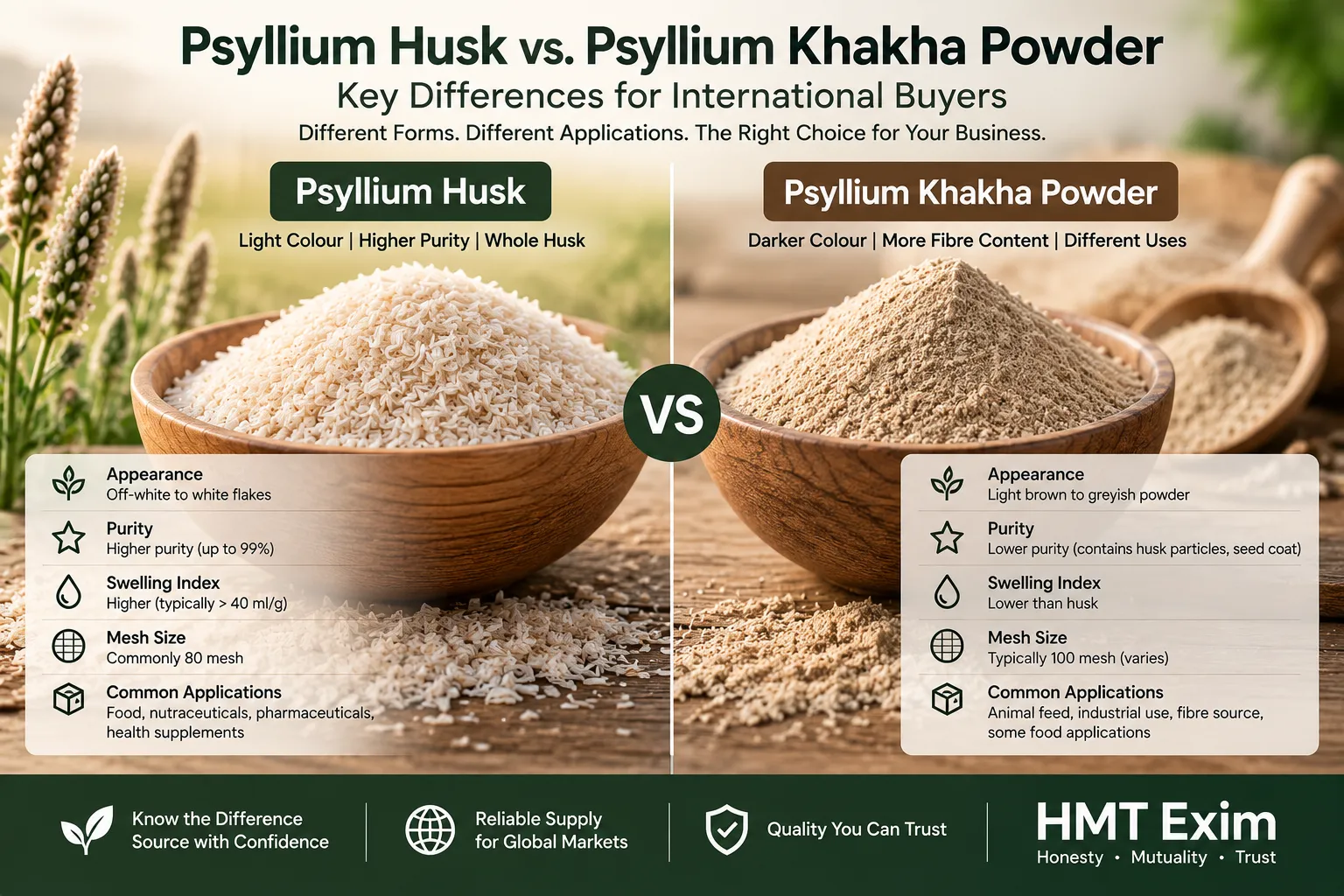
Psyllium Husk vs. Khakha Powder: At a Glance
This table is a practical comparison, but buyers should always request the supplier's product specification because trade terminology can differ.
The Main Difference Is Physical Form
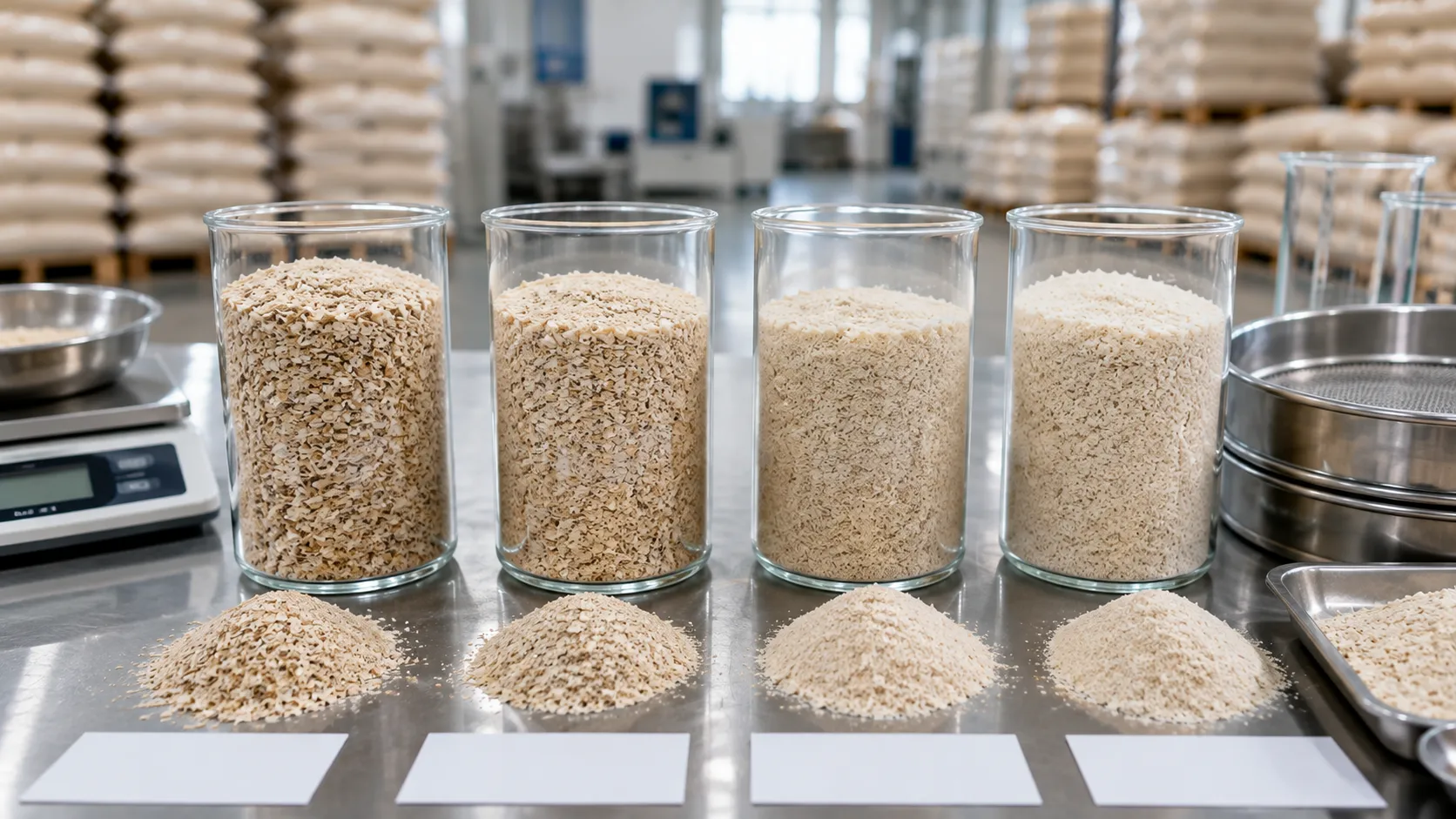
The most obvious difference is how the material appears and behaves physically.
Whole or minimally processed Psyllium Husk retains its characteristic husk structure. A powdered product has a substantially finer physical form resulting from additional processing.
This difference can affect handling, blending and the suitability of the material for a particular manufacturing process.
Why Particle Size Matters
Particle size is an important specification when buying processed Psyllium ingredients.
Buyers should not assume that a product described as “powder” has a particular mesh size. The supplier should confirm the actual particle-size requirement and testing basis.
Our article Psyllium Husk 80 Mesh: What Does Mesh Size Mean? explains how mesh terminology is used when discussing Psyllium particle size.
Husk and Powder Should Not Be Treated as Automatically Interchangeable
A buyer should not assume that Psyllium Husk and a powdered Psyllium product can be substituted for each other without checking the application.
Processing changes the physical form of the material. The buyer's manufacturing process may therefore require one form rather than another.
Before ordering, confirm the required:
- Product form
- Particle size
- Purity
- Moisture specification
- Swelling Index requirement
- Packaging format
- Application requirements
Does Powder Mean Higher Purity?
No. Physical fineness and purity are different characteristics.
A finer product is not automatically a higher-purity product. Buyers should evaluate purity separately through the agreed specification and appropriate quality documentation.
This distinction is important when comparing quotations from different suppliers. A lower-priced powdered material should not be assumed to have the same quality profile as a specified grade of Psyllium Husk.
What About Swelling Index?
Swelling Index is a separate quality parameter and should not be inferred simply from whether the product is supplied as husk or powder.
Where swelling performance is important to the buyer's application, the required specification and testing method should be agreed before commercial production.
See Psyllium Husk Swelling Index: What International Buyers Should Know for more information.
How Buyers Should Compare the Two Products
A useful comparison begins with the intended application rather than the product name.
- Define the required application.
- Specify the desired physical form.
- Confirm particle-size requirements.
- Define purity and moisture requirements.
- Confirm Swelling Index where relevant.
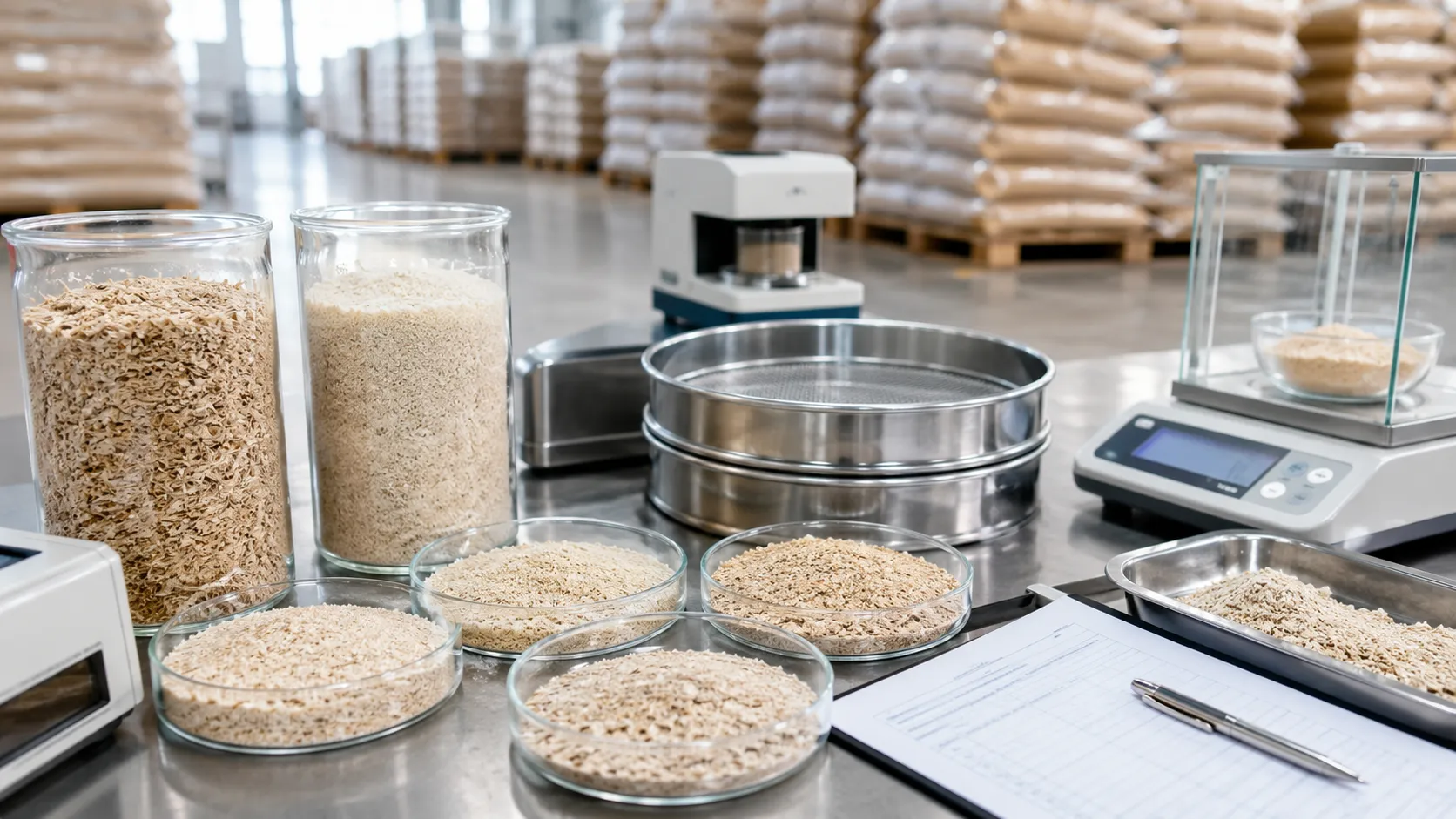
- Request a representative sample.
- Review the supplier's specification and documentation.
- Approve the material before placing a larger order.
This process reduces the risk of purchasing a product that has a familiar name but does not match the buyer's actual requirements.
Questions to Ask a Psyllium Supplier
When a supplier quotes Psyllium Khakha Powder or another powdered Psyllium product, buyers should ask:
- What exactly does the supplier mean by “Khakha Powder”?
- What part of the Psyllium seed is contained in the product?
- What processing has been performed?
- What is the particle-size or mesh specification?
- What purity specification applies?
- What is the moisture specification?
- What Swelling Index is achieved where applicable?
- Can a production sample be provided?
- Is a Certificate of Analysis available?
These questions are particularly useful when buying from a supplier in another country where terminology may not be familiar.
How This Relates to Psyllium Husk Specifications
Regardless of the product name, buyers should evaluate the material against measurable specifications.
Our Psyllium Husk Specifications guide covers purity, moisture, Swelling Index and mesh size in greater detail.
Buyers can also review How to Evaluate Psyllium Husk Quality Before Buying for a broader supplier-evaluation checklist.
Packaging Considerations
Both husk and powdered products may require suitable food-grade packaging for bulk transportation and storage.
The packaging requirement should be discussed according to the product form, shipment size, destination and buyer's handling process.
Before ordering, clarify bag size, inner-liner requirements, labelling requirements and any customized packaging requirements.
How HMT Exim Can Discuss Product Requirements
HMT Exim supplies export-oriented Psyllium products for international B2B buyers. Product form, specifications, packaging and shipment requirements can be discussed according to the buyer's intended application.
Explore the Psyllium Husk product page or contact HMT Exim to discuss your required product specification.
Frequently Asked Questions
Is Psyllium Husk the same as Psyllium Khakha Powder?
They can refer to different physical forms or processed Psyllium materials. Because “Khakha” can be used as a trade term, buyers should ask the supplier for an exact product definition and specification.
Is Psyllium Khakha Powder finer than Husk?
A powdered product is generally presented in a finer physical form than conventional Psyllium Husk, but the actual particle size should be confirmed with the supplier.
Does powder automatically have higher purity?
No. Particle size and purity are separate specifications.
Should buyers request samples?
Yes. A physical sample allows buyers to evaluate the product form and compare it with the required specification before approving a bulk order.
Does mesh size apply to powdered Psyllium?
Particle size can be specified for processed Psyllium products. Buyers should confirm the exact mesh or particle-size requirement with the supplier.
What should international buyers ask before ordering Khakha Powder?
They should ask for the exact product definition, processing details, particle size, purity, moisture, relevant quality parameters, packaging information and a representative sample.
Final Takeaway
The terms Psyllium Husk and Psyllium Khakha Powder should not be treated as interchangeable product descriptions without verification.
For international B2B purchasing, the safer approach is to define the physical form, processing level, particle size and quality specifications before comparing suppliers or approving a bulk order.
If you are sourcing Psyllium products from India and need help matching the product form to your requirements, contact HMT Exim with your desired specification and application.