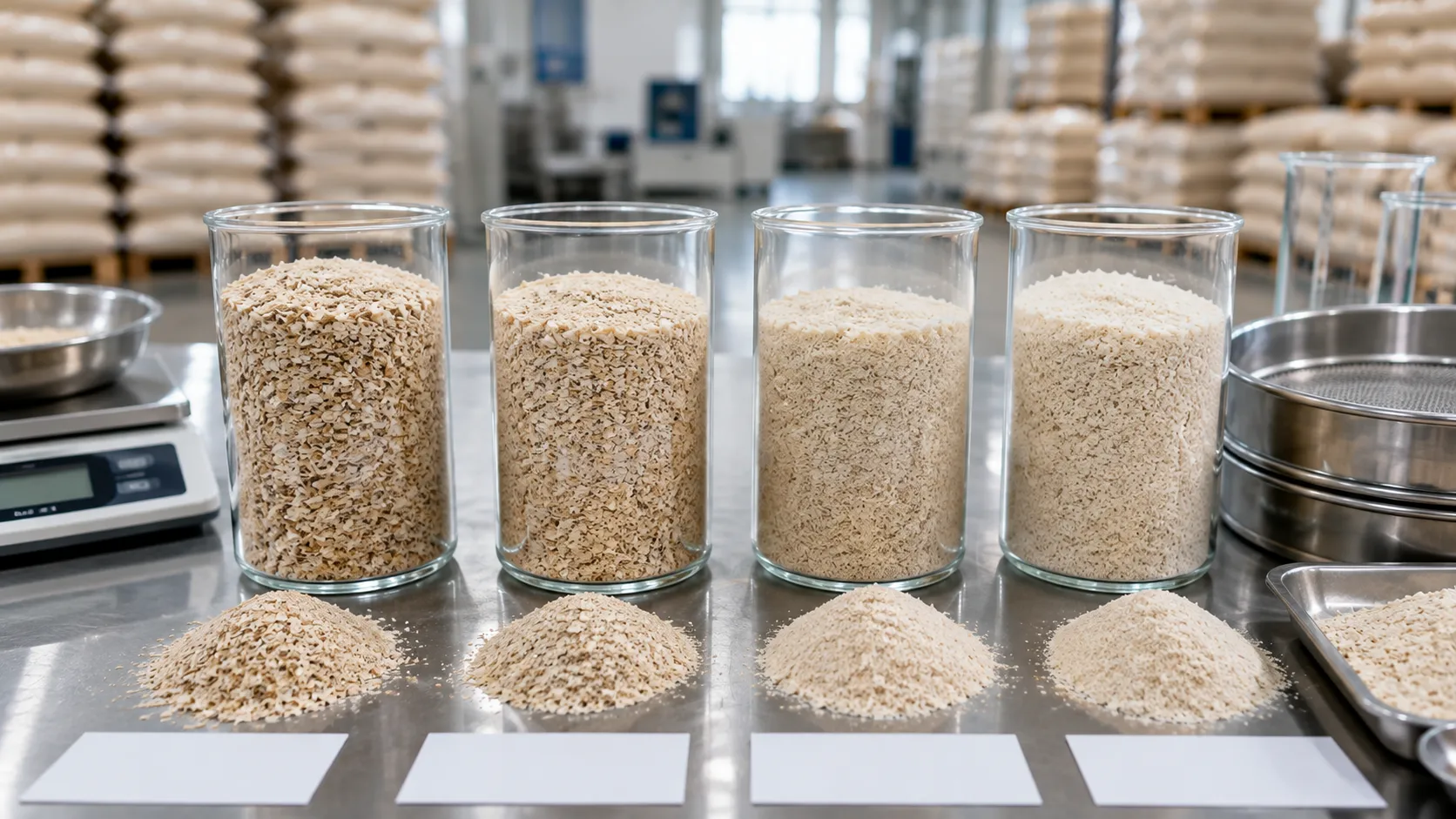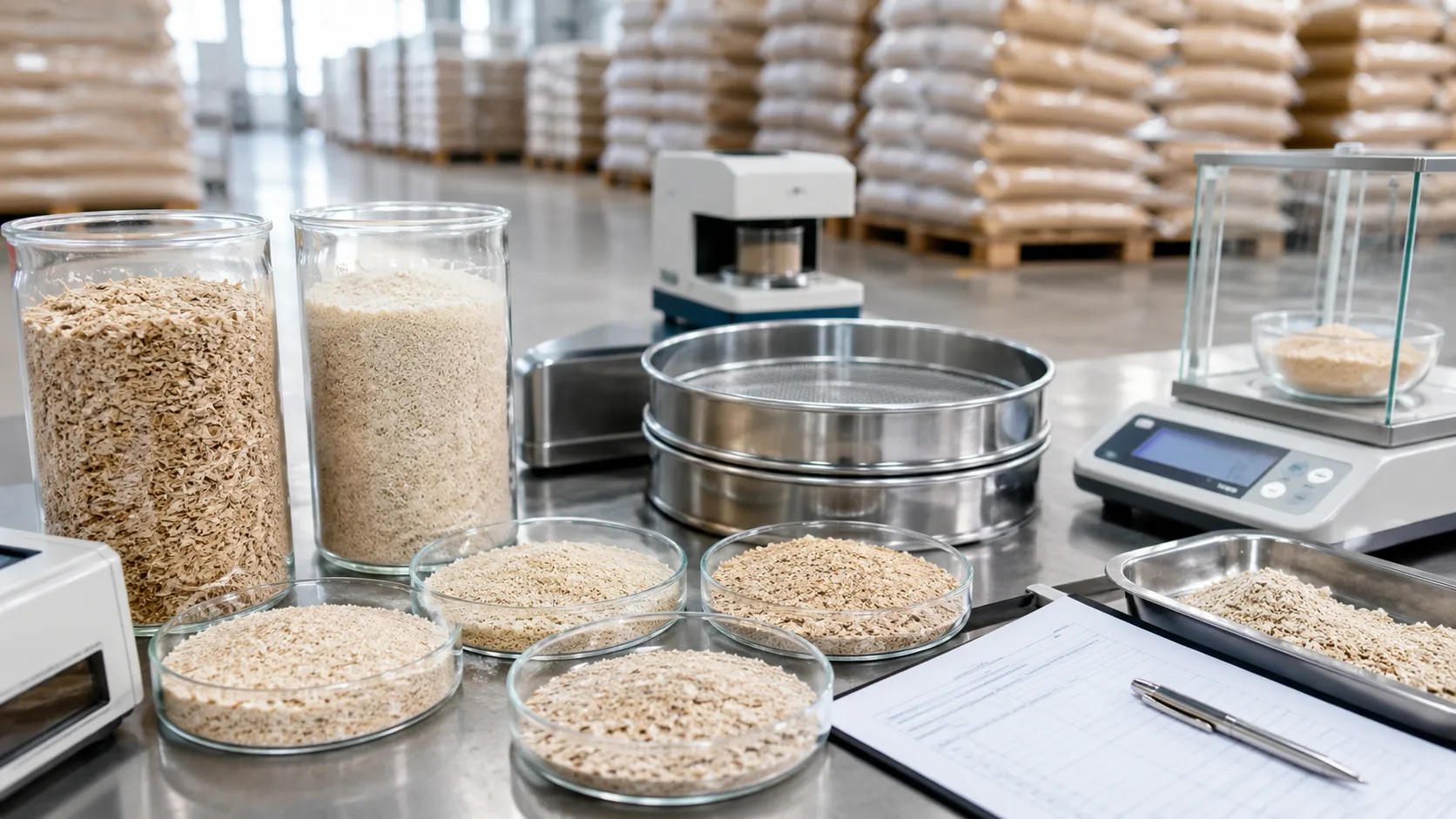
When sourcing Psyllium Husk from India, buyers often request specifications such as 80 mesh, 100 mesh or customized particle sizes. While mesh numbers appear simple, they can significantly influence how the ingredient performs during manufacturing, blending and packaging.
Understanding mesh size helps international buyers communicate precise specifications with suppliers and avoid receiving a product that doesn't match their production requirements.
This guide explains what 80 mesh means, how mesh size is measured, why it matters in B2B sourcing and what buyers should confirm before placing a bulk order.
What Does 80 Mesh Mean?
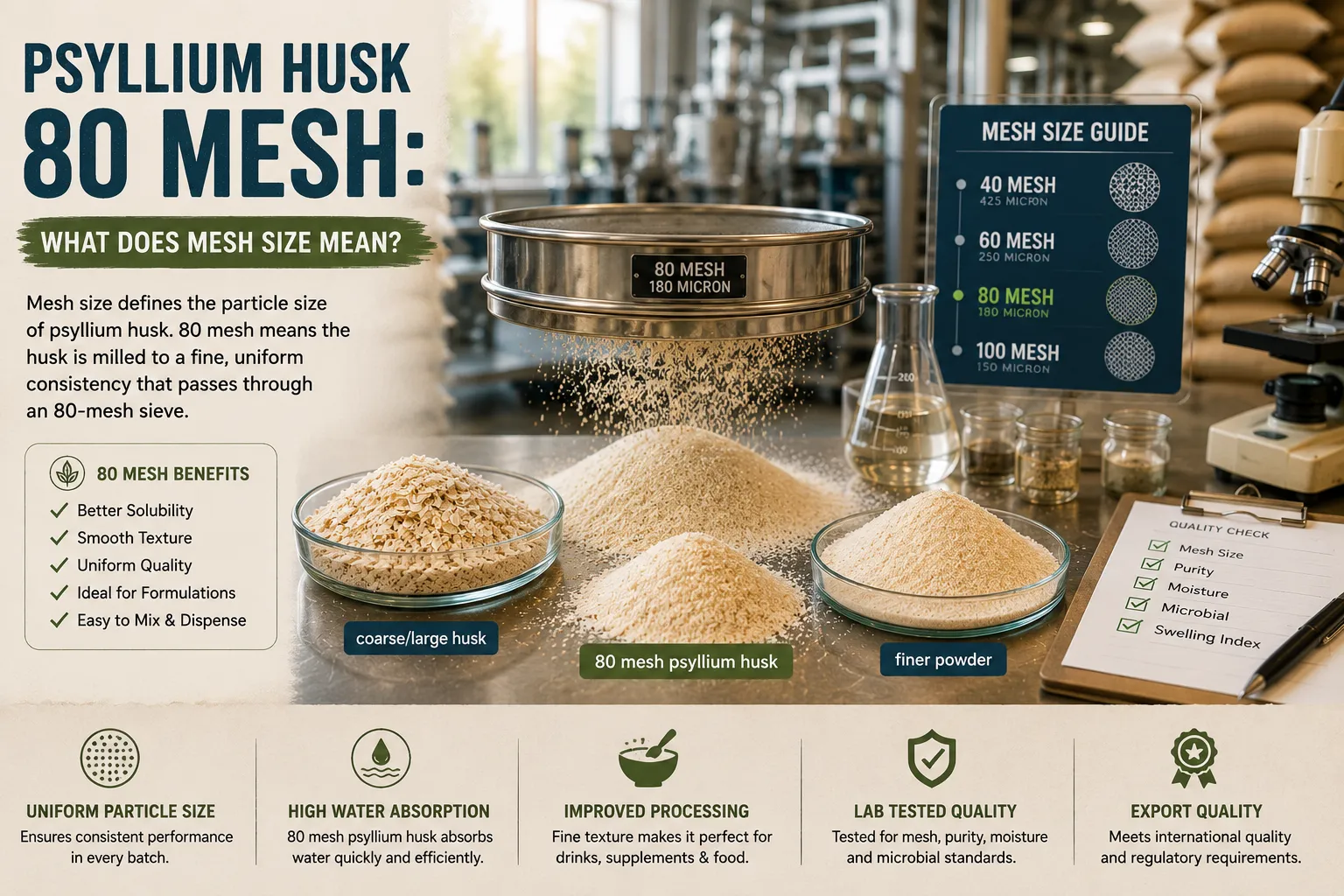
Mesh refers to the number of openings in a screening mesh within one linear inch. An 80-mesh screen contains approximately 80 openings per inch, making it a commonly used specification for finely processed Psyllium Husk Powder.
Instead of viewing mesh as a quality grade, buyers should understand it as a particle-size specification.
Higher mesh numbers generally indicate finer particles, while lower mesh numbers indicate relatively coarser material.
How Is Mesh Size Measured?
Manufacturers typically determine mesh size using calibrated laboratory sieves. During testing, the material passes through screens with standardized openings to verify whether the product meets the required particle-size specification.
Because analytical procedures can vary, buyers should confirm the supplier's testing method whenever mesh size is a critical purchasing requirement.
Why Is 80 Mesh Popular for Psyllium Husk?
80 mesh is frequently requested because it provides a fine powder form suitable for many commercial applications while remaining practical for handling and packaging.
However, whether 80 mesh is the correct choice depends entirely on the buyer's formulation and processing requirements.
80 Mesh vs 100 Mesh: What's the Difference?
| Parameter | 80 Mesh | 100 Mesh |
|---|---|---|
| Particle size | Fine | Finer |
| Processing | Standard fine milling | Additional fine milling |
| Handling | Good flow characteristics | More finely processed powder |
| Application | Application-specific | Application-specific |
The correct specification should always be selected according to the intended manufacturing process rather than assuming that a finer powder is automatically better.
Does Mesh Size Affect Psyllium Quality?
No. Mesh size describes particle size, not overall product quality.
A high-quality Psyllium Husk Powder should still be evaluated for:
- Purity
- Moisture
- Swelling characteristics
- Microbiological quality
- Foreign matter
- Packaging
- Certificate of Analysis
A product with the correct mesh but poor quality documentation may still be unsuitable for commercial sourcing.
Which Industries Use 80 Mesh Psyllium?
Different industries may specify 80 mesh depending on their formulation and processing requirements.
Applications can include:
- Food manufacturing
- Bakery formulations
- Nutraceutical production
- Dietary fiber ingredients
- Functional food products
- Industrial ingredient blending
The exact mesh requirement should always be determined by the buyer's production process.
Should Buyers Specify Mesh Size in the Purchase Order?
Yes. Mesh size should be included as part of the written product specification rather than discussed only during quotation.
A complete specification should include:
- Required product form
- Mesh size
- Purity
- Moisture
- Swelling specification where applicable
- Packaging
- Quantity
- Destination country
- Required documentation
Writing these requirements into the commercial documentation helps reduce misunderstandings during production.
Sample Testing Before Bulk Purchase
Before confirming a commercial shipment, buyers should evaluate a representative sample against the agreed specification.
Important checks include:
- Particle size
- Appearance
- Moisture
- Swelling characteristics
- Packaging
- Certificate of Analysis
Sample approval provides a useful reference point before larger production quantities are dispatched.
For a broader understanding of quality evaluation, see our Psyllium Husk quality evaluation guide.
How Mesh Size Relates to Psyllium Grades
Mesh size and commercial grades such as 85%, 95%, 98% and 99% describe different aspects of the product.
Grade generally relates to commercial purity specifications, while mesh describes particle size.
Our guide on Psyllium Husk grades explained covers how buyers should approach grade selection.
How to Compare Supplier Quotations
Instead of comparing quotations only by price, buyers should verify:
- Product form
- Mesh specification
- Purity
- Moisture
- Swelling characteristics
- Microbiological requirements
- Packaging
- Certificate of Analysis
- Commercial terms
This creates a more accurate comparison between suppliers offering similar-looking products with different specifications.
80 Mesh Buyer Checklist
- ☐ Required mesh size is specified
- ☐ Product form is confirmed
- ☐ Purity specification is documented
- ☐ Moisture requirement is documented
- ☐ Swelling specification is confirmed
- ☐ Microbiological requirements are confirmed
- ☐ Sample has been evaluated
- ☐ COA requirements are agreed
- ☐ Packaging matches the shipment requirement
- ☐ Commercial quotation matches the approved specification
Bulk Psyllium Husk From India
HMT Exim supports B2B sourcing requirements for Indian Psyllium products. Buyers can review the Psyllium Husk product page and discuss their required mesh size, product form, quantity and destination.
For quotation requests, visit the HMT Exim contact page and share your required specification.
Frequently Asked Questions
What does 80 mesh mean?
It refers to the approximate number of openings per linear inch in a standardized screening mesh used to classify particle size.
Is 100 mesh better than 80 mesh?
Not necessarily. A higher mesh number indicates finer particles, but the correct choice depends on the intended application.
Does mesh size affect Psyllium quality?
Mesh describes particle size rather than overall product quality. Buyers should evaluate purity, moisture, testing and documentation alongside mesh.
Should I request a sample before ordering?
Yes. Evaluating a representative sample helps confirm that the product matches the agreed specification before a bulk shipment.
Can suppliers provide custom mesh sizes?
Many commercial suppliers can discuss customized particle-size requirements depending on production capabilities and order specifications.
Final Takeaway
80 mesh is one of the most widely discussed particle-size specifications in Psyllium sourcing, but it should never be considered in isolation. Buyers should combine mesh size with purity, moisture, swelling characteristics, packaging and quality documentation when defining a commercial specification.
If you already know your required mesh size and quantity, contact HMT Exim to discuss your Psyllium sourcing requirement.