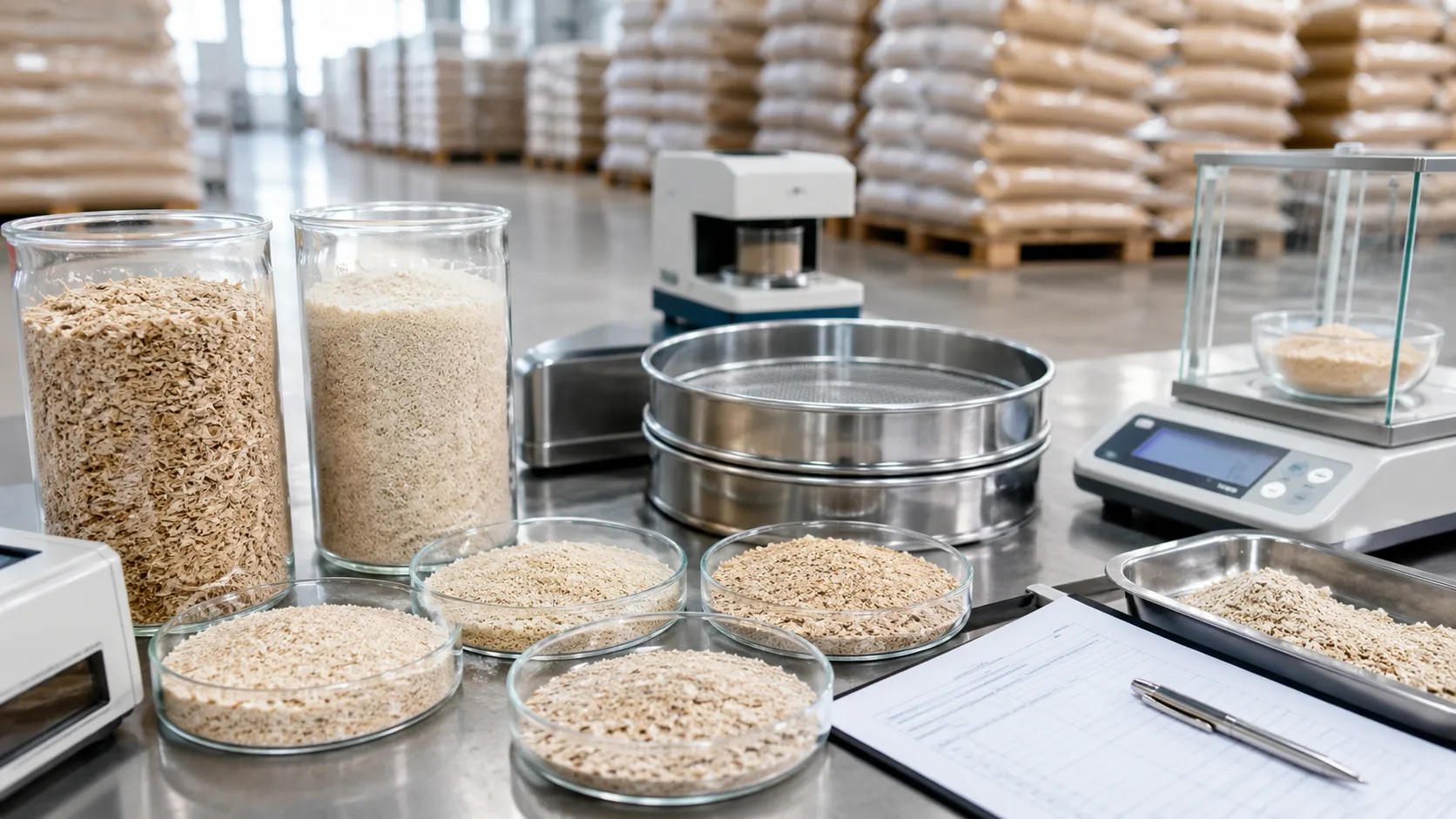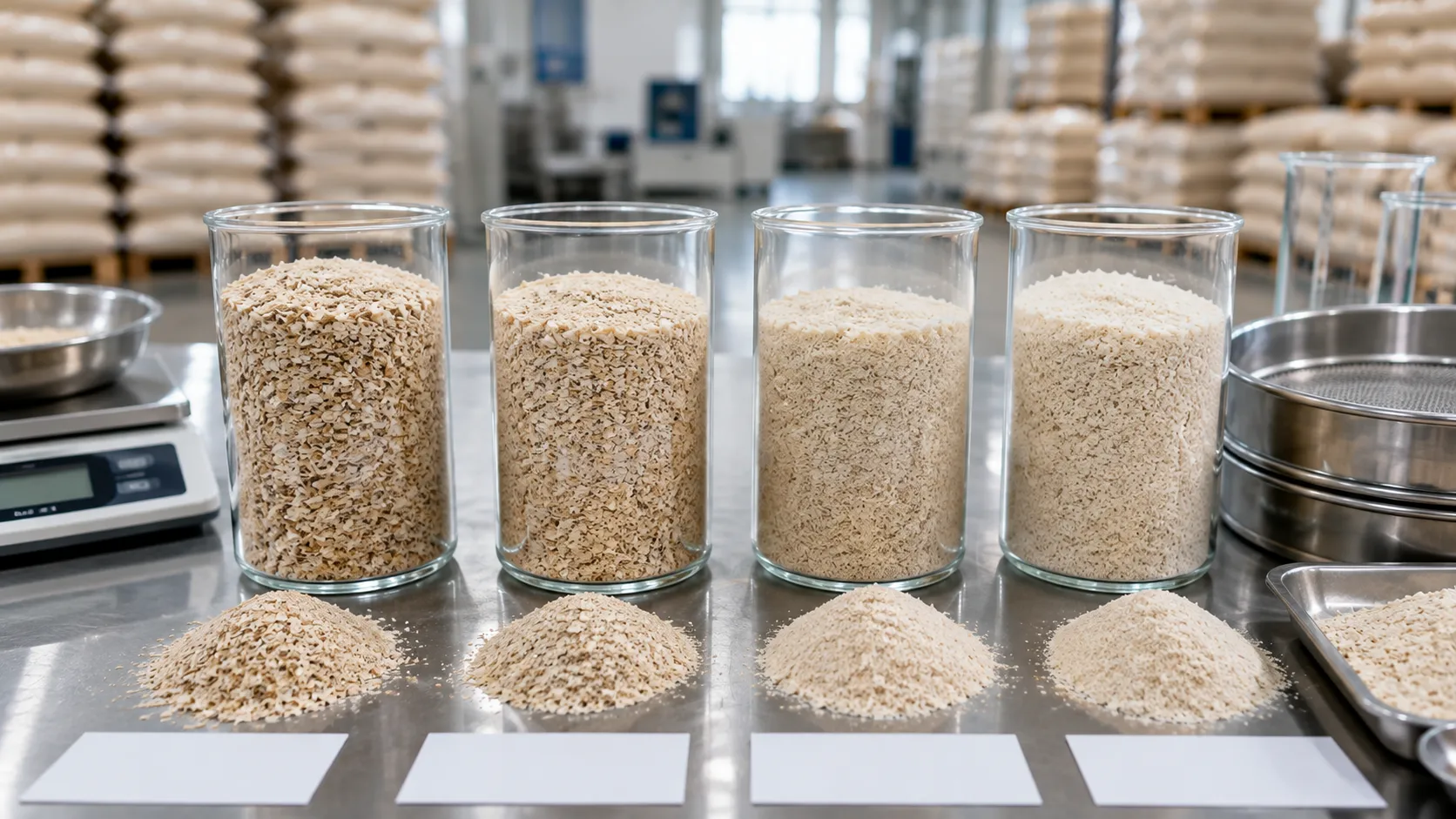
When sourcing Psyllium Husk in bulk, buyers often encounter commercial grades such as 85%, 95%, 98% and 99%. These numbers are commonly used to describe different purity or specification levels, but a higher percentage is not automatically the right choice for every application.
The correct grade depends on the buyer's intended use, required purity, technical specification, processing requirements, target market and commercial considerations. International buyers should therefore compare the complete product specification rather than selecting a grade based only on the percentage shown in a quotation.
Quick Answer: What Do 85%, 95%, 98% and 99% Psyllium Husk Grades Mean?
In commercial Psyllium Husk sourcing, these percentages generally indicate different purity or quality specifications offered by suppliers. The exact meaning and testing basis should be confirmed with the supplier because commercial grading terminology is not necessarily a single globally standardized classification system.
For a buyer, the important question is not simply whether a product is called 85%, 95%, 98% or 99%. The buyer should ask what the percentage represents, how it is measured, which specification applies to the shipment and what supporting quality documentation is available.
Psyllium Husk Grade Comparison
| Commercial Grade | General Position | Typical Buyer Consideration | Best Approach |
|---|---|---|---|
| 85% | Lower commercial purity specification | May suit applications where the required specification allows a lower purity level | Confirm the exact purity definition and application requirement |
| 95% | Higher purity specification | Suitable where a cleaner and more consistent ingredient specification is required | Compare purity, physical characteristics and test results |
| 98% | High-purity commercial grade | Often considered where tighter quality requirements are important | Confirm the complete specification rather than relying on the grade name |
| 99% | Very high commercial purity specification | Used when buyers require a particularly high purity specification | Confirm the test method, specification and application suitability |
These descriptions are general commercial guidance. The exact specification of a particular grade must be agreed between buyer and supplier before an order is placed.
What Does the Percentage Actually Tell a Buyer?
The percentage should be treated as one part of a technical specification rather than the entire definition of product quality.
Before comparing quotations, ask the supplier to clearly state:
- What the percentage represents
- The applicable purity specification
- The testing or analytical basis
- Moisture specification
- Mesh or particle-size specification where applicable
- Swelling characteristics where applicable
- Foreign matter requirements
- Microbiological requirements
- Packaging specification
- Certificate of Analysis availability
This prevents two suppliers from quoting apparently similar percentages while using different underlying specifications.
85% Psyllium Husk: When Can It Be Considered?
An 85% commercial grade may be considered when the buyer's application does not require the tighter purity specification associated with higher grades.
However, buyers should not assume that 85% means poor quality. The appropriate question is whether the product meets the specification required for the intended application.
For price-sensitive industrial applications, a lower commercial purity specification may sometimes provide a commercially suitable option when the end-use requirements allow it.
What Should Buyers Confirm?
- Exact purity definition
- Foreign matter limits
- Moisture level
- Physical appearance
- Swelling characteristics where relevant
- Testing documentation
- Intended application suitability
95% Psyllium Husk: A Higher Purity Option
95% Psyllium Husk represents a higher commercial purity specification than an 85% grade. Buyers considering this grade should still evaluate the full specification rather than assuming that the percentage alone determines product performance.
This grade can be relevant for buyers looking for a balance between purity requirements and commercial cost, depending on their formulation and quality standards.
The buyer should request a representative sample and compare the sample against the agreed specification before confirming a large commercial order.
98% Psyllium Husk: High-Purity Sourcing
98% Psyllium Husk is commonly positioned as a high-purity commercial grade. It may be considered when the buyer requires a tighter purity specification for a particular food, fibre, nutraceutical or formulation application.
At this level, it becomes particularly important to document the agreed specification clearly. Buyers should not compare suppliers only on the quoted percentage and price.
A meaningful comparison should include purity, moisture, particle size where applicable, swelling characteristics, microbiological requirements, packaging and the supplier's quality documentation.
99% Psyllium Husk: Very High Purity Specification
99% Psyllium Husk represents a very high commercial purity specification and may be appropriate for applications where the buyer has stringent purity requirements.
Higher purity can come with a higher commercial price, but the additional cost is justified only when the buyer's application actually requires the tighter specification.
Before purchasing a 99% grade, ask the supplier exactly how the 99% specification is established and request the applicable Certificate of Analysis or laboratory documentation.
Is 99% Psyllium Husk Always Better Than 85%?
No. The highest percentage is not automatically the best product for every buyer.
For example, if an industrial application is designed around a lower purity specification, paying a premium for a higher grade may not provide a meaningful commercial advantage.
The correct buying decision should balance:
- Application requirements
- Required purity
- Technical performance
- Regulatory or destination-market requirements
- Quality documentation
- Packaging
- Order quantity
- Target price
This is why professional B2B sourcing starts with a written specification rather than a simple request for the cheapest available grade.
Other Psyllium Husk Specifications Buyers Should Compare
Grade percentage is only one part of the product specification. A complete buyer specification can include several additional parameters.
Purity
Confirm exactly what the quoted purity percentage represents and how it is measured.
Moisture
Moisture requirements should be agreed before the order because storage and transportation conditions can affect product condition.
Mesh Size
For Psyllium Husk powder or processed material, particle size can affect handling and formulation. Buyers should specify the required mesh or particle-size range where applicable.
Swelling Characteristics
Swelling behaviour can be an important technical consideration because Psyllium is widely used as a functional dietary fibre. Buyers should define the required specification and testing method when this parameter is important to the application.
Microbiological Quality
Food and nutraceutical applications may require microbiological testing according to the destination market and intended use.
Foreign Matter
Buyers should establish acceptable foreign-matter limits and understand how the supplier controls product cleanliness.
How Should an International Buyer Compare Psyllium Husk Quotations?
Do not compare quotations using the grade percentage and price alone.
A better comparison looks like this:
- Define the intended application.
- Specify the required purity grade.
- Define moisture and physical specifications.
- Define mesh or particle size where applicable.
- Define swelling requirements where applicable.
- Specify microbiological and safety requirements.
- Confirm packaging requirements.
- Request a representative sample.
- Request the applicable Certificate of Analysis.
- Compare the complete commercial quotation.
Buyers who are beginning their sourcing process can also review the Psyllium Husk B2B sourcing guide for a broader overview of supplier selection and bulk sourcing.
Sample Approval Before Bulk Purchase
A sample can help the buyer evaluate the physical characteristics of the proposed product before committing to commercial volume.
For a serious bulk transaction, the approved sample should be linked to a written product specification. This creates a reference point for the commercial shipment and reduces ambiguity between buyer and supplier.
Buyers should also understand that a sample evaluation does not replace appropriate quality testing or shipment-level quality controls where those are required.
How Supplier Verification Fits Into Grade Selection
A product grade is only useful when the supplier can consistently deliver the agreed specification.
Before placing a large order, buyers should therefore evaluate both the product and the exporter. Our guide on how to verify an Indian exporter explains how buyers can review business identity, product specifications, documentation, quotations and payment information.
Grade Selection Checklist for Psyllium Husk Buyers
- ☐ Intended application is clearly defined
- ☐ Required Psyllium Husk grade is specified
- ☐ Meaning of the quoted percentage is confirmed
- ☐ Purity specification is documented
- ☐ Moisture specification is documented
- ☐ Mesh or particle-size requirement is documented where applicable
- ☐ Swelling specification is documented where applicable
- ☐ Microbiological requirements are confirmed
- ☐ Foreign matter requirements are confirmed
- ☐ Packaging requirements are agreed
- ☐ Representative sample is evaluated
- ☐ Certificate of Analysis is reviewed
- ☐ Commercial quotation matches the approved specification
- ☐ Supplier identity and export capability have been reviewed
Which Psyllium Husk Grade Should You Buy?
There is no universal answer. The right grade depends on the buyer's technical requirements and intended application.
An 85% grade may be commercially suitable for an application that allows a lower purity specification. A 95% grade may provide a higher purity option for buyers with tighter requirements. A 98% or 99% grade may be considered when a high or very high purity specification is required.
The best approach is to define the required specification first and then ask suppliers to quote against that specification.
Explore Psyllium Husk From HMT Exim
HMT Exim supplies Indian Psyllium Husk for B2B sourcing requirements. Buyers can review the Psyllium Husk product information and discuss the required grade, specification, quantity, packaging and destination.
For buyers who need help defining a sourcing requirement, the HMT Exim contact page provides an enquiry route where you can share your product requirement, expected quantity, destination and application.
Frequently Asked Questions
What are the main Psyllium Husk grades?
Common commercial grades discussed by buyers include 85%, 95%, 98% and 99%. The exact meaning of each percentage should be confirmed with the supplier because commercial grading terminology can vary.
Is 99% Psyllium Husk always the best grade?
No. The appropriate grade depends on the buyer's application and technical requirements. A higher purity specification is useful only when the application requires it.
What should I ask a Psyllium Husk supplier about the grade?
Ask what the percentage represents, how it is tested, which specification applies to the shipment and whether supporting quality documentation such as a Certificate of Analysis is available.
Should I request a sample before buying bulk Psyllium Husk?
For a new supplier relationship, sample evaluation is a practical step before committing to a large commercial quantity. The approved sample should be evaluated against a written specification.
Does Psyllium Husk grade affect price?
Higher purity specifications can carry higher commercial pricing, but pricing also depends on quantity, packaging, market conditions, specifications and other commercial factors.
Final Takeaway
85%, 95%, 98% and 99% Psyllium Husk should be viewed as commercial grade specifications rather than simple quality rankings. The right choice depends on the application, required purity, technical parameters, destination requirements and total commercial value.
For international buyers, the strongest sourcing process is to define the specification first, evaluate a representative sample, review quality documentation and confirm that the exporter can consistently supply the agreed grade.
If you already know your required Psyllium Husk grade and quantity, contact HMT Exim to discuss your sourcing requirement.