For international buyers sourcing Psyllium Husk from India, product quality starts well before the husk reaches the processing facility. The condition of the Psyllium seed at harvest and the way it is handled afterward can influence the consistency of the finished ingredient.
This is particularly relevant for importers and manufacturers purchasing Psyllium Husk in bulk. A supplier may meet an agreed specification for one shipment, but maintaining consistency across multiple procurement cycles requires attention to the agricultural and processing stages of the supply chain.
Understanding the relationship between harvest conditions and finished Psyllium Husk quality can help buyers ask better questions when evaluating long-term suppliers.
Why Does Psyllium Harvest Timing Matter?
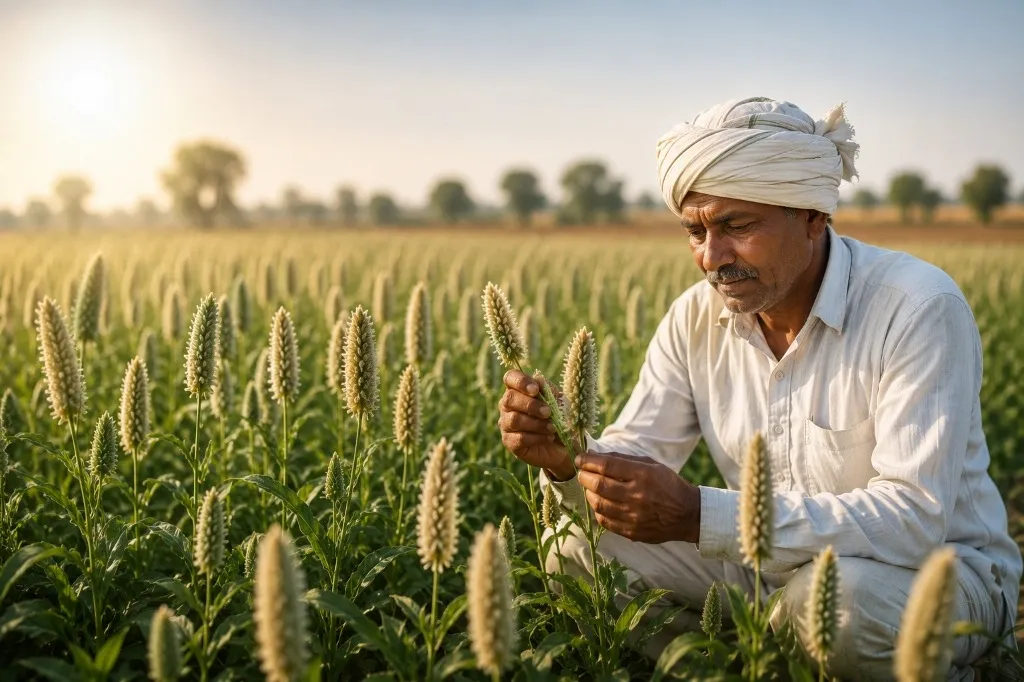
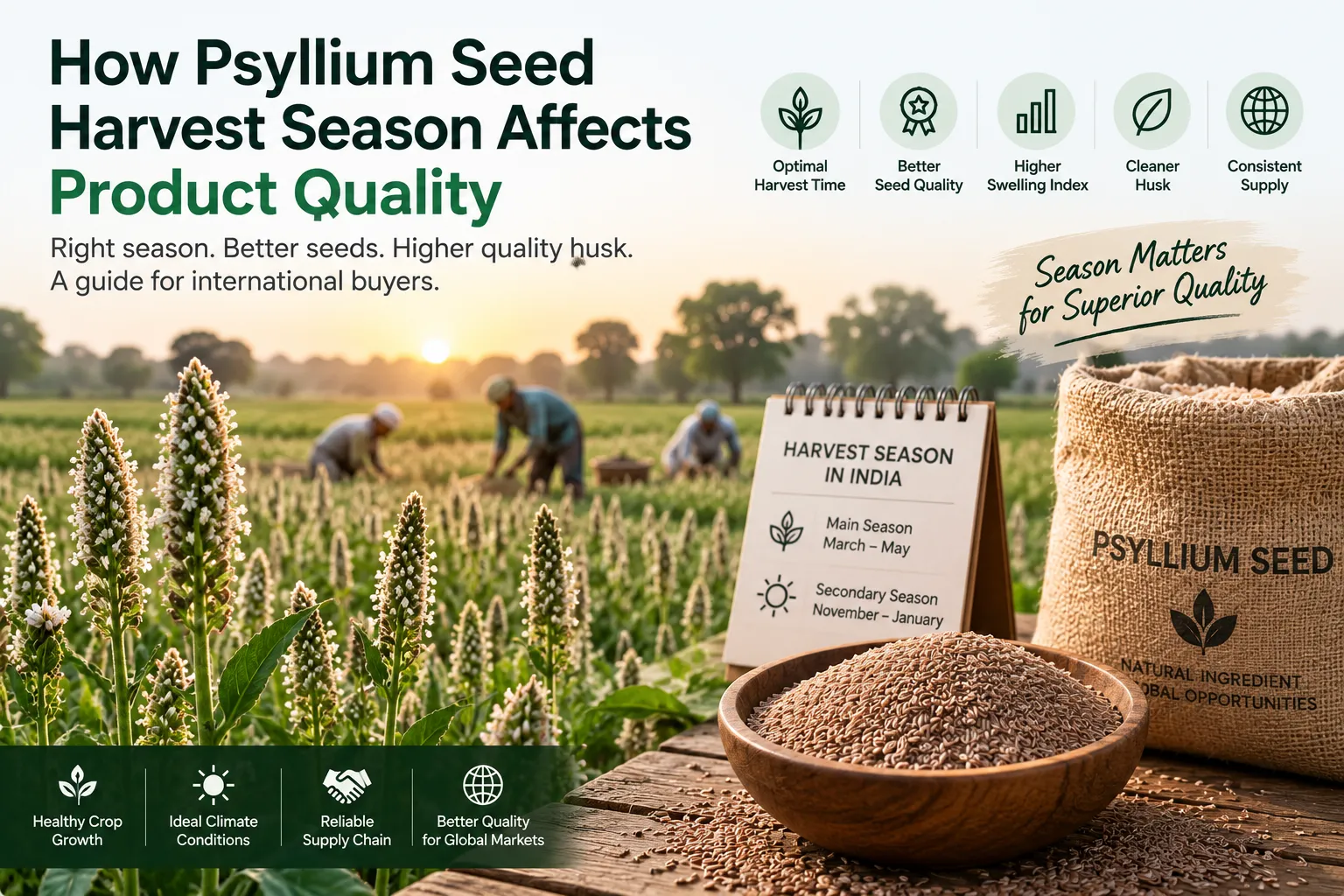
Psyllium is an agricultural crop, so the raw material entering the processing chain depends on the crop cycle and harvest conditions.
Harvesting at an appropriate stage helps ensure that the seed is sufficiently mature for subsequent processing. Harvest timing also interacts with weather and field conditions, which can affect post-harvest handling requirements.
For a bulk buyer, the important issue is not simply the calendar date of harvest. It is whether the resulting raw material can be processed into a consistent finished product that meets the agreed specification.
From Psyllium Seed to Husk
Psyllium Husk is obtained from the seed of Plantago ovata. The seed passes through stages including harvesting, cleaning, processing and separation before the husk is prepared for commercial use.
Each stage can influence the final product.
- Crop cultivation
- Seed maturity
- Harvesting
- Drying and post-harvest handling
- Cleaning
- Processing and husk separation
- Quality inspection
- Packaging
Because these stages are connected, buyers evaluating a supplier should consider the complete supply chain rather than treating processing as an isolated activity.
How Weather Around Harvest Can Matter
Weather conditions during harvesting and post-harvest handling can affect how easily agricultural material can be dried, cleaned and stored.
Excess environmental moisture can create additional handling challenges for a dry ingredient supply chain. For this reason, appropriate post-harvest handling and storage practices are important for protecting raw-material quality before processing.
Buyers should avoid assuming that a particular harvest season automatically guarantees a particular quality grade. Actual quality still needs to be verified through the product specification and appropriate testing.
Seed Maturity and Finished Husk Quality
The maturity and condition of harvested seed are important starting points for processing.
Raw material that is inconsistent or contains excessive unwanted material can create additional cleaning and processing requirements. Consistent sourcing and proper quality control therefore become important when producing commercial Psyllium Husk for international buyers.
For buyers, the practical question is whether the supplier can consistently deliver the agreed finished-product specifications rather than simply which harvest the material came from.
Post-Harvest Handling Is Just as Important
Harvesting is only the beginning of the raw-material journey.
After harvest, the material needs to be handled in a way that protects it from unnecessary exposure to moisture, contamination and physical damage.
Important considerations include:
- Timely handling after harvest
- Appropriate drying practices
- Protection from environmental moisture
- Clean storage conditions
- Effective cleaning before processing
- Batch identification and traceability
These practices help create a more controlled transition from agricultural raw material to processed ingredient.
Does Harvest Season Determine Psyllium Husk Purity?
Not by itself.
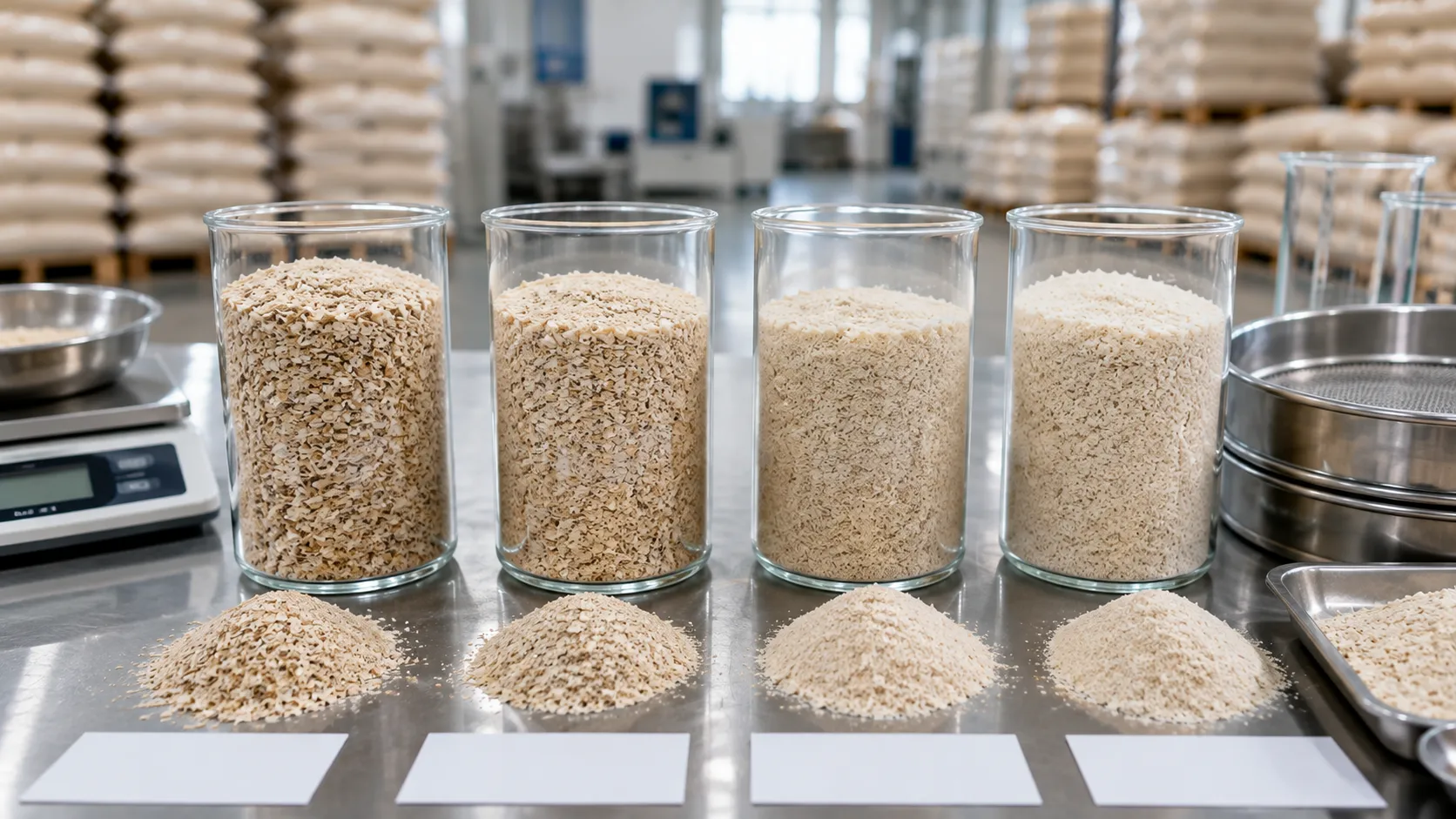
Purity is a finished-product quality characteristic that depends on factors including raw-material selection, cleaning, processing and quality control.
A buyer should therefore not assume that a harvest-season label is a substitute for a specification sheet or Certificate of Analysis.
For a broader explanation of quality parameters, see Psyllium Husk Specifications: Purity, Moisture, Swelling Index and Mesh Explained.
Harvest Conditions and Moisture Management
Moisture deserves particular attention throughout the agricultural and post-harvest stages.
Buyers evaluating bulk Psyllium Husk should distinguish between the moisture condition of harvested raw material and the moisture specification of the finished product.
The finished product should be evaluated against the agreed commercial specification rather than judged solely by the conditions during the crop season.
Can Harvest Season Affect Swelling Index?
Harvest conditions can be one part of the broader raw-material quality picture, but buyers should not assume a direct one-to-one relationship between harvest season and a specific Swelling Index.
Swelling performance should be verified through the agreed testing method and product documentation.
Read Psyllium Husk Swelling Index: What International Buyers Should Know for a detailed explanation of this parameter.
Why Batch Consistency Matters to Long-Term Buyers
A manufacturer purchasing Psyllium Husk repeatedly needs predictable raw-material and finished-product quality.
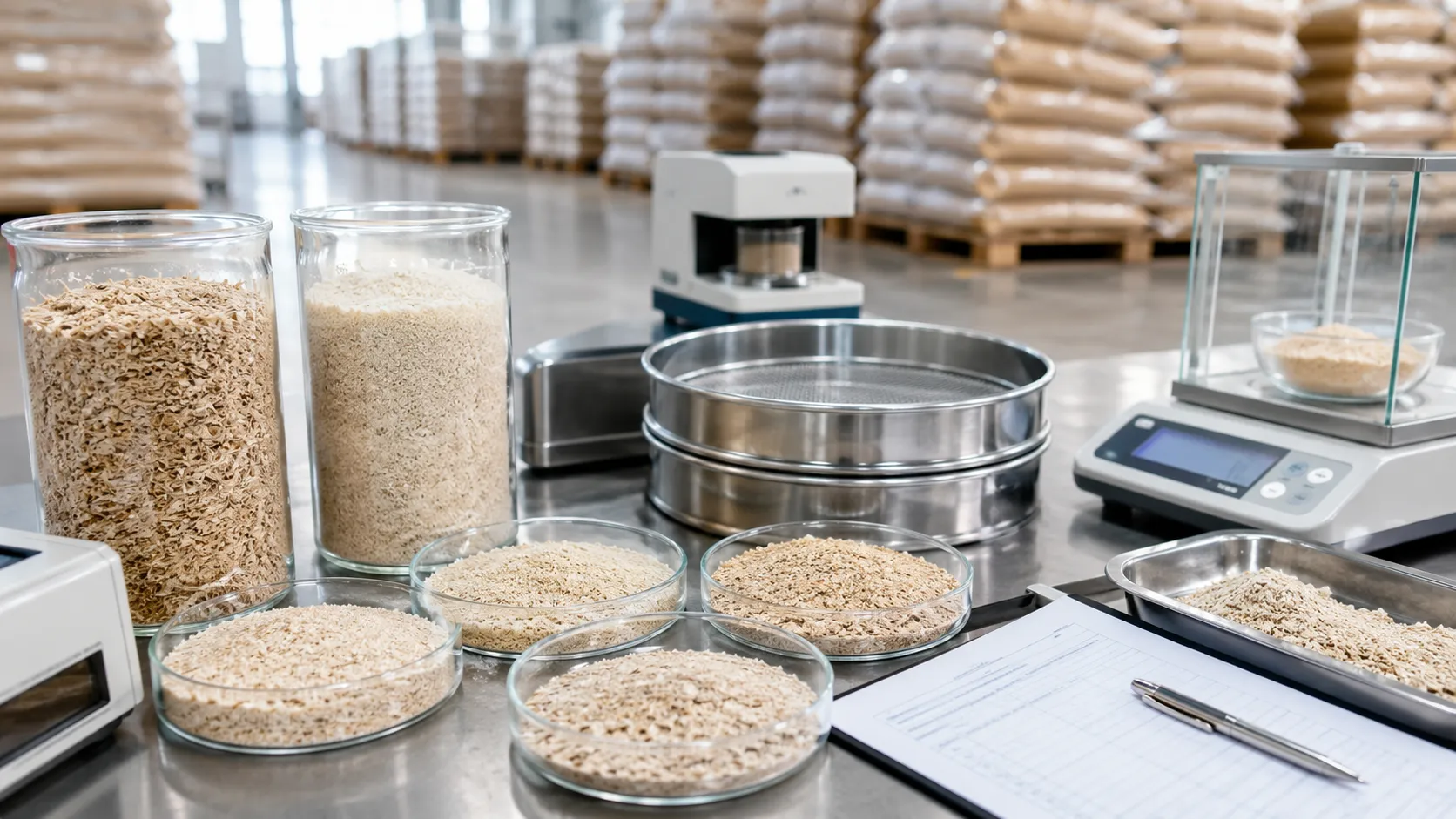
Long-term buyers should therefore ask suppliers how they manage variation between batches and how the finished product is tested before shipment.
Useful questions include:
- How is incoming raw material evaluated?
- How is the material cleaned before processing?
- How are production batches identified?
- Which quality parameters are tested?
- Is a Certificate of Analysis available?
- Can the supplier maintain the agreed specification across repeat orders?
These questions provide more useful information than relying on harvest season alone.
What Should Buyers Ask About the Harvest?
International buyers can include agricultural and sourcing questions in their supplier evaluation:
- What is the source region of the raw material?
- How is the seed cleaned before processing?
- How is raw material stored before processing?
- How is batch traceability maintained?
- How is finished-product quality verified?
- Can the supplier provide samples from the intended production batch?
These questions help buyers understand the supplier's quality-control process without treating harvest timing as a guarantee of product performance.
Harvest Season vs Finished-Product Specification
This distinction helps buyers avoid making decisions based on agricultural timing alone.
Harvest Season and Supplier Selection
Harvest information can be useful when discussing sourcing, but supplier evaluation should remain focused on measurable quality and supply capability.
A reliable evaluation can include:
- Product sample
- Specification sheet
- Certificate of Analysis where applicable
- Packaging details
- Batch information
- Supplier communication
- Ability to meet repeat-order requirements
Our Psyllium Husk quality evaluation checklist covers these considerations in greater detail.
How HMT Exim Approaches Psyllium Husk Sourcing
HMT Exim focuses on export-oriented sourcing and quality requirements for international B2B buyers. Product specifications, packaging requirements and shipment details can be discussed according to the buyer's requirements.
Buyers can explore the Psyllium Husk product page or contact HMT Exim to discuss sourcing requirements.
Frequently Asked Questions
When is Psyllium harvested in India?
Psyllium is a seasonal agricultural crop, but harvest timing can vary with growing conditions and region. Buyers should confirm the actual crop and sourcing details with their supplier rather than relying on a fixed date.
Does harvest season guarantee Psyllium Husk quality?
No. Harvest timing is only one part of the supply chain. Finished-product quality depends on raw-material condition, processing, cleaning, testing and storage.
Can weather affect Psyllium seed quality?
Weather conditions can influence harvesting and post-harvest handling. The practical impact on the finished product should be evaluated through appropriate quality controls and testing.
Should buyers ask about the harvest when purchasing Psyllium Husk?
Yes, harvest and sourcing information can provide useful supply-chain context, but buyers should also verify the finished-product specification and supporting documentation.
Can different harvest batches have different quality?
Agricultural raw materials can vary between batches. Supplier quality control and finished-product testing are therefore important for maintaining consistency.
What should buyers verify before a bulk order?
Buyers should verify the agreed specification, sample, relevant quality documentation, packaging and supplier's ability to maintain the required quality across the commercial shipment.
Final Takeaway
Psyllium Husk quality begins with agricultural raw material, but harvest season alone does not determine the quality of the finished ingredient.
For international buyers, the more useful approach is to understand the complete chain from seed maturity and post-harvest handling through cleaning, processing, testing and packaging.
When sourcing for long-term requirements, buyers should use harvest information as part of their supply-chain assessment while relying on documented finished-product specifications and sample approval for commercial decisions.
If you are sourcing Psyllium Husk from India for bulk or recurring requirements, contact HMT Exim to discuss your specifications and sourcing needs.