When international buyers request a Psyllium Husk quotation, they rarely ask for price alone. Instead, they usually request a detailed product specification covering purity, moisture, swelling index, mesh size and laboratory documentation.
Understanding these specifications helps buyers compare suppliers fairly, approve samples confidently and reduce sourcing risks before placing large commercial orders.
This guide explains the most important Psyllium Husk specifications used in international B2B trade.
Why Specifications Matter in International Trade
Two Psyllium Husk samples may look similar but perform differently during manufacturing. That is why professional buyers rely on documented specifications rather than visual inspection alone.
A complete specification sheet helps buyers:
- Compare suppliers objectively
- Verify product consistency
- Approve commercial samples
- Reduce shipment disputes
- Meet customer quality requirements
Specifications become even more important for food manufacturers, nutraceutical companies and ingredient distributors.
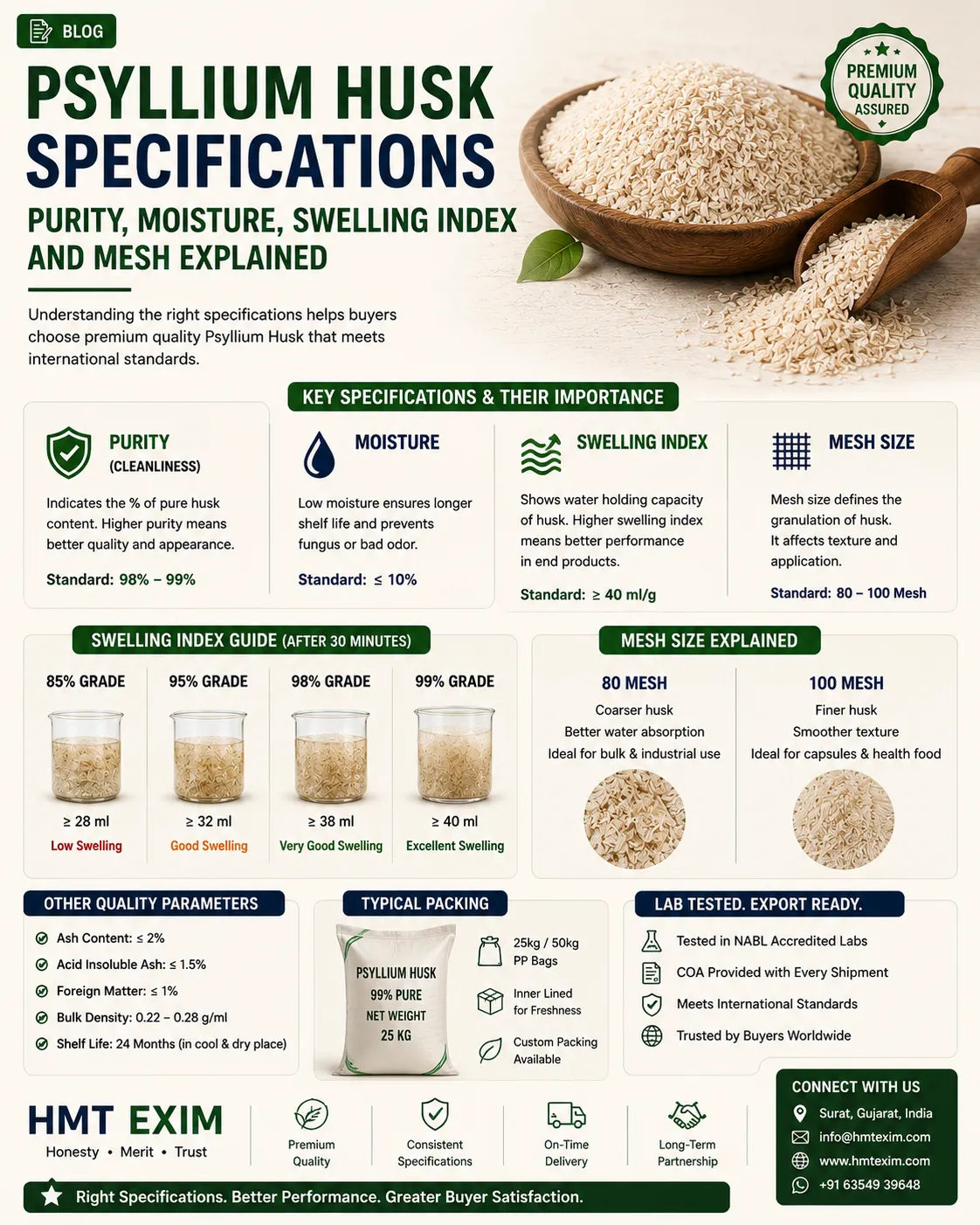
Quick Overview of Key Specifications
Rather than focusing on one parameter, experienced buyers evaluate the complete quality profile.
Purity: The First Commercial Quality Check
Purity is one of the first specifications buyers review before requesting samples.
Instead of relying only on commercial grade names, buyers should request a detailed product specification describing the supplied material.
Professional suppliers should clearly communicate:
- Commercial grade
- Product form
- Foreign matter control
- Processing consistency
- Batch identification where applicable
Our guide on Psyllium Husk Grades Explained explores how commercial grades differ.
Moisture: Why It Matters
Moisture directly affects storage stability, transportation performance and overall product handling.
Professional buyers usually request documented moisture information as part of the Certificate of Analysis.
Instead of treating moisture as a minor detail, experienced buyers evaluate it alongside packaging quality and storage conditions.
Swelling Index: A Critical Technical Specification
Swelling Index measures how Psyllium Husk behaves after absorbing water.
It is one of the most requested technical specifications because hydration performance often matters in commercial manufacturing.
Rather than accepting verbal claims, buyers should request supporting laboratory documentation wherever required.
Our dedicated article on Psyllium Husk Swelling Index explains this parameter in greater detail.
Mesh Size: Understanding Particle Consistency
Mesh size describes particle size rather than hydration performance.
Different buyers may request different mesh specifications depending on their manufacturing process.
Instead of assuming every fine powder behaves the same way, buyers should verify the agreed particle-size specification before production.
Learn more in Psyllium Husk 80 Mesh.
Laboratory Testing Buyers Commonly Request
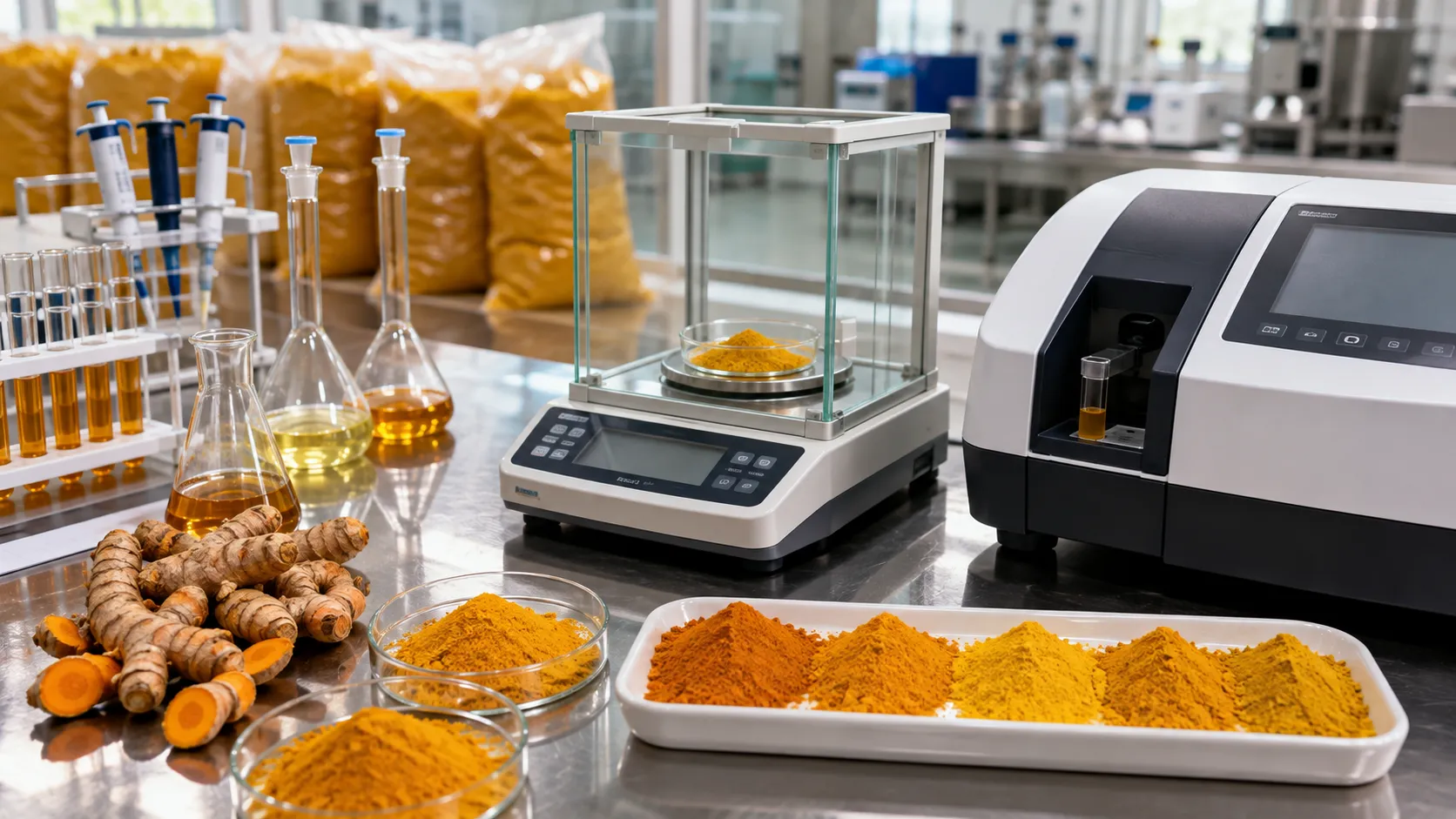
Professional export transactions often involve laboratory documentation supporting the agreed specification.
Depending on buyer requirements, testing may include:
- Purity
- Moisture
- Swelling Index
- Mesh Size
- Microbiological parameters
- Heavy metals where required
- Batch information
Laboratory documentation helps reduce commercial disputes before shipment.
Packaging Specifications for Export
Even high-quality Psyllium Husk requires appropriate packaging during international transportation.
Commercial packaging options commonly include:
- 25 kg food-grade bags
- 50 kg food-grade bags
- Food-grade inner liners
- Customized packaging
- Private-label packaging
The right packaging depends on buyer requirements and shipment size.
Questions Buyers Should Ask Before Ordering
Instead of asking only for the lowest quotation, professional buyers should request:
- Complete specification sheet
- Certificate of Analysis
- Mesh specification
- Swelling information
- Moisture information
- Packaging details
- Sample availability
- Batch consistency information
These questions create a stronger commercial foundation before approving bulk production.
How HMT Exim Supports Quality-Focused Buyers
HMT Exim supplies export-oriented Psyllium Husk with quality-focused sourcing, laboratory documentation where applicable, export-ready packaging and shipment coordination for international buyers. The company's product profile highlights flexible packaging solutions designed for long-term commercial relationships.
Explore our Psyllium Husk product page to learn more about our export offerings.
Frequently Asked Questions
Which specification is most important?
Professional buyers evaluate purity, moisture, Swelling Index, mesh size and laboratory documentation together rather than relying on a single parameter.
Does higher purity guarantee better performance?
No. Buyers should evaluate the complete specification, including Swelling Index and mesh size, based on the intended application.
Why do buyers request a COA?
A Certificate of Analysis helps verify that the supplied product matches the agreed commercial specification.
Should buyers approve a sample before placing a bulk order?
Yes. Sample approval helps confirm that the supplied product meets the required specification before larger commercial shipments.
Can packaging be customized?
Many commercial export shipments can be packed according to buyer branding and packaging requirements.
Final Takeaway
Psyllium Husk specifications are more than technical numbers—they help buyers make informed commercial decisions before committing to large international orders.
Instead of comparing suppliers only by price, buyers should evaluate documented specifications, laboratory testing, packaging quality and supplier consistency to build reliable long-term sourcing relationships.
If you're sourcing export-quality Psyllium Husk from India, contact HMT Exim to discuss your required specifications, packaging and destination market.