Curcumin is one of the naturally occurring curcuminoids found in turmeric, and it is an important quality parameter for many buyers sourcing turmeric powder from India. However, curcumin percentage should not be treated as the only measure of turmeric quality.
For B2B buyers, a proper turmeric specification should consider curcuminoid content together with moisture, mesh size, microbiological quality, contaminants, colour, purity, packaging and destination-market requirements.
This guide explains what curcumin means in turmeric, how buyers should interpret percentage specifications, how laboratory testing works and what to ask an Indian turmeric supplier before placing a bulk order.
What Is Curcumin?
Curcumin is a naturally occurring compound found in the rhizome of Curcuma longa, the plant commonly known as turmeric. It belongs to a group of compounds called curcuminoids.
Turmeric contains several curcuminoids, with curcumin being the principal one. The concentration of these compounds varies according to turmeric variety, growing conditions, processing and other factors.
For commercial buyers, this means that a turmeric quotation stating a particular curcumin or curcuminoid percentage should always be connected to a defined testing method and product specification.
Why Does Curcumin Matter to Turmeric Buyers?
Curcuminoid content can be an important quality and specification parameter when buyers are sourcing turmeric for food ingredients, spice blends, extracts or other commercial applications.
It can help buyers compare raw materials, establish purchasing specifications and communicate technical requirements to suppliers.
However, a higher curcuminoid percentage does not automatically mean that a turmeric powder is suitable for every application. The correct specification depends on the buyer's intended use and destination-market requirements.
Curcumin vs Curcuminoids: What Is the Difference?
This distinction is important when reviewing turmeric laboratory reports.
Curcumin refers to the principal curcuminoid compound.
Curcuminoids refers to the broader group of related compounds naturally present in turmeric.
Commercial and regulatory documents may use different terminology depending on the specification and analytical method. Buyers should therefore confirm exactly what a supplier's reported percentage represents before comparing two quotations.
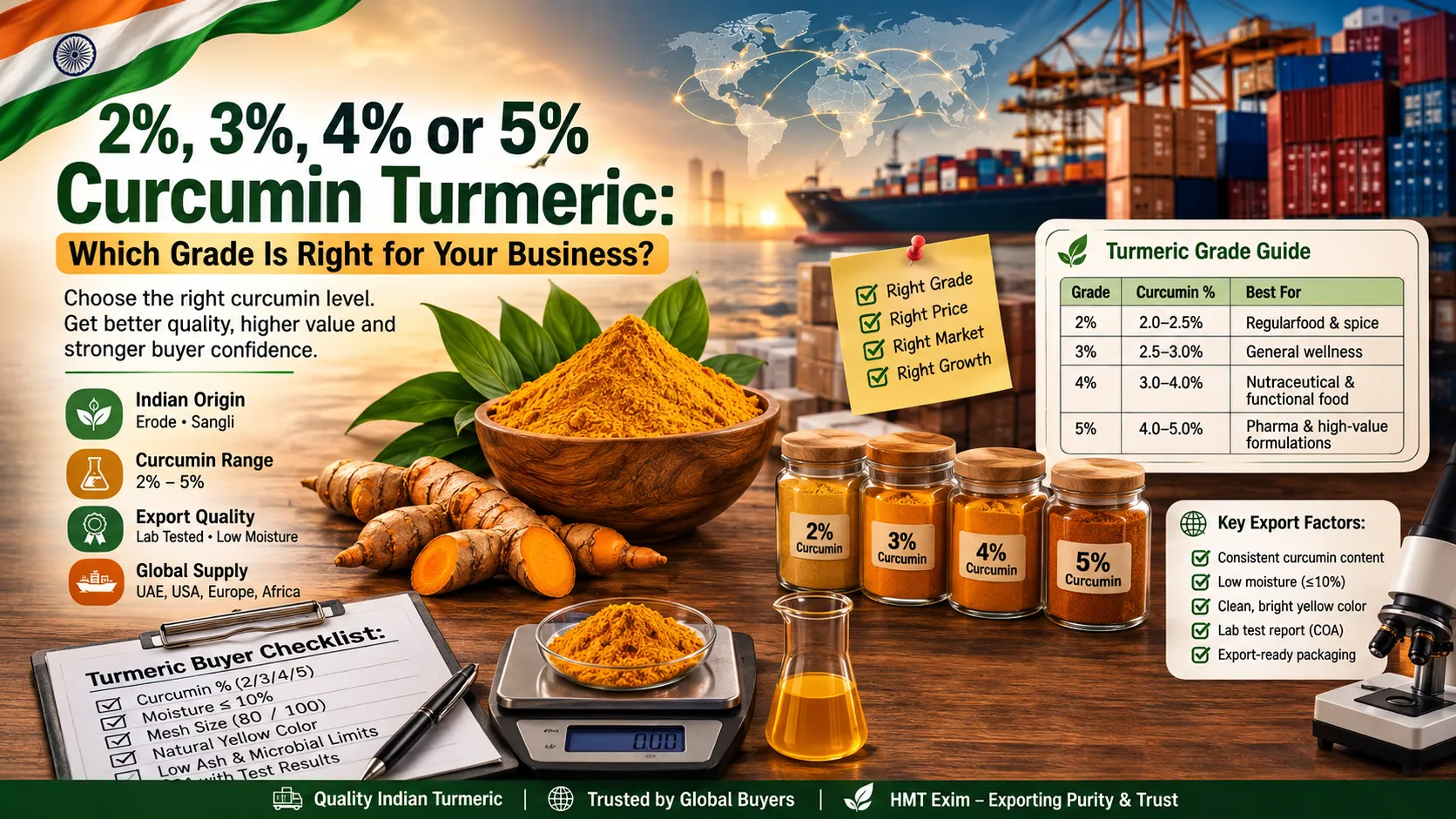
What Does a 2%, 3%, 3.5% or 4% Turmeric Specification Mean?
In commercial turmeric sourcing, buyers may encounter specifications such as 2%, 3%, 3.5% or 4%. These figures should be interpreted as a declared analytical specification rather than as a complete description of product quality.
For example, a buyer requesting 4% turmeric should confirm whether the requirement refers to curcumin specifically or total curcuminoids, which analytical method is being used, whether the result is reported on a dry basis and what tolerance applies to the commercial shipment.
The specification should be agreed before the quotation and purchase order are finalized.
How Is Curcumin in Turmeric Tested?
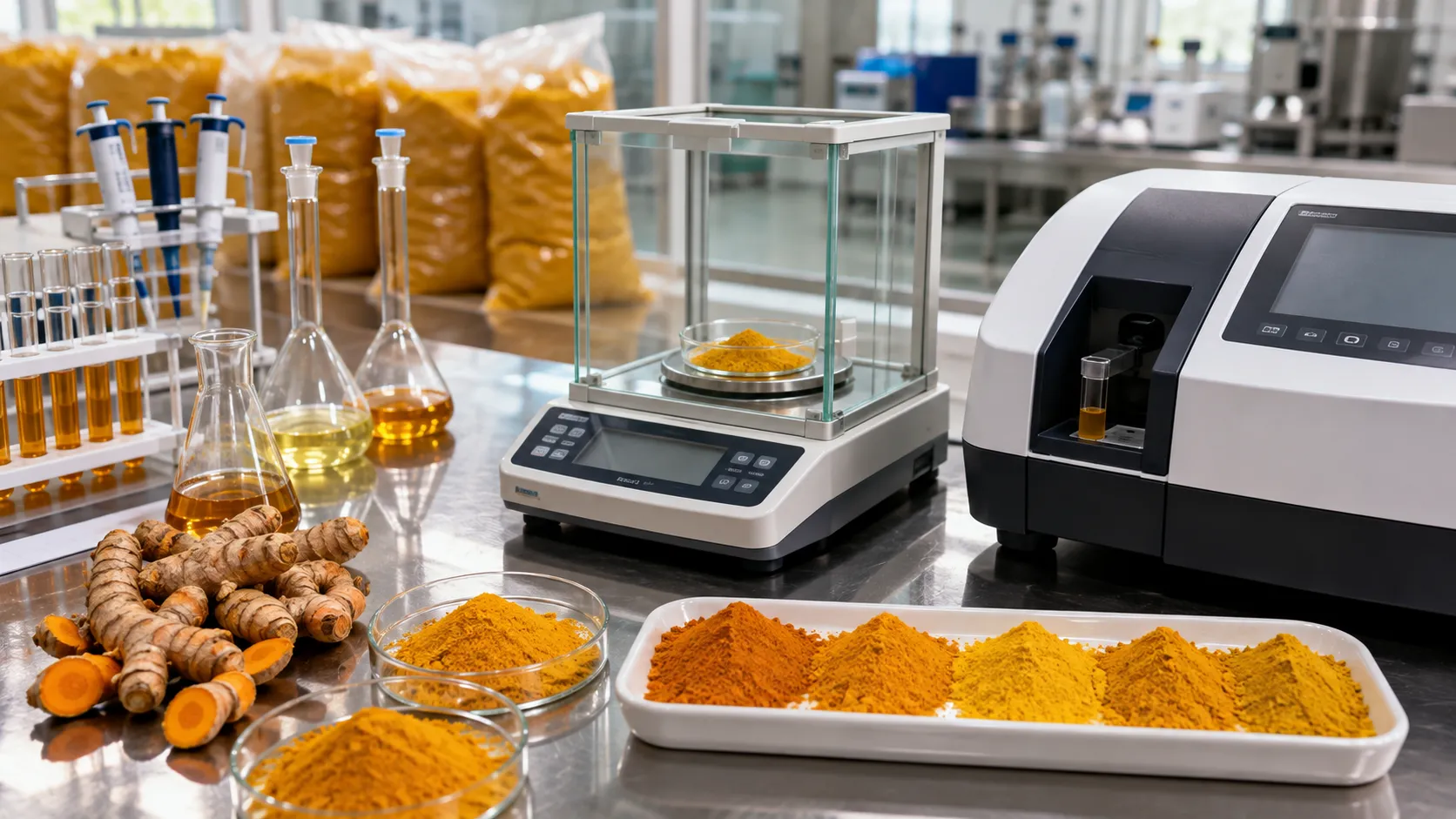
Laboratory testing is the appropriate way to determine curcumin content. FSSAI publishes a method for determination of curcumin in turmeric using a spectrophotometric procedure. The method involves extracting the sample and measuring absorbance at a specified wavelength.
For international B2B sourcing, the important point is consistency of methodology. When comparing results from different suppliers or laboratories, buyers should understand the analytical method and reporting basis rather than comparing percentages without context.
What Should Be Included in a Turmeric COA?
A Certificate of Analysis can provide useful information for evaluating a turmeric shipment against the agreed specification.
Depending on the product and buyer requirements, a turmeric COA may include:
- Curcumin or curcuminoid specification
- Moisture
- Total ash and other applicable quality parameters
- Mesh size
- Microbiological parameters
- Heavy metals or other contaminants where required
- Pesticide-residue testing where required
- Foreign matter
- Batch or lot identification
- Testing date and laboratory information
The exact testing panel should be agreed according to the application and destination country.
Is Higher Curcumin Always Better?
No. Higher curcumin or curcuminoid content can be desirable for some applications, but it is not a universal ranking of turmeric quality.
A food manufacturer may have a different specification from a buyer sourcing turmeric for a spice blend, nutraceutical ingredient or further processing.
The correct approach is to determine the technical requirement first and then source a product that consistently meets it.
Other Turmeric Specifications Buyers Should Evaluate
Curcumin should be evaluated alongside other product parameters.
Moisture
Moisture is important for product stability and storage. Buyers should establish an acceptable moisture specification and confirm how it is tested.
Mesh Size
Mesh size affects the physical characteristics of powdered turmeric and can be important for blending and processing. Buyers should specify the required mesh rather than accepting a generic description such as fine powder.
Microbiological Quality
Food and ingredient buyers should define applicable microbiological requirements according to the intended use and destination market.
Contaminants and Residues
Depending on the destination and application, buyers may need requirements covering heavy metals, pesticide residues, mycotoxins or other regulated contaminants.
Colour and Appearance
Colour and appearance can provide useful preliminary information but should not replace analytical testing.
How Should Buyers Compare 3% and 4% Turmeric?
A buyer should not compare the two products solely by the number.
Instead, compare:
- The exact meaning of the percentage
- Analytical method
- Reporting basis
- Specification tolerance
- Moisture
- Mesh size
- Microbiological requirements
- Contaminant and residue requirements
- Packaging
- Price and commercial quantity
This creates a more meaningful B2B comparison than simply selecting the supplier with the highest quoted percentage.
Curcumin and Turmeric Variety
Turmeric varieties and growing conditions can influence the composition and physical characteristics of turmeric. Buyers sourcing from India should therefore define the required product specification rather than assuming that all Indian turmeric has the same curcumin level.
Variety, origin, processing and storage can all be relevant when establishing a consistent commercial supply.
Why Laboratory Testing Matters Before Bulk Purchase
A product sample can help a buyer assess physical characteristics, but laboratory testing provides a more objective basis for confirming analytical specifications.
For a new supplier relationship, buyers should consider evaluating a representative sample before committing to commercial volume and should agree on the quality parameters that will apply to the bulk shipment.
If you are comparing suppliers, our guide on how to choose a reliable turmeric supplier in India provides additional due-diligence points.
How to Verify an Indian Turmeric Supplier
Technical specifications are only one part of supplier selection. Buyers should also review the exporter, business information, documentation, communication and commercial terms.
Before placing a significant international order, buyers can use our guide on how to verify an Indian exporter as part of their supplier due-diligence process.
Turmeric Buyer's Curcumin Checklist
- ☐ Required curcumin or curcuminoid specification is defined
- ☐ Meaning of the quoted percentage is confirmed
- ☐ Analytical method is confirmed
- ☐ Reporting basis is confirmed
- ☐ Required tolerance is documented
- ☐ Moisture specification is documented
- ☐ Mesh size is documented
- ☐ Microbiological requirements are confirmed
- ☐ Contaminant and residue requirements are confirmed
- ☐ Representative sample is evaluated
- ☐ COA requirements are agreed
- ☐ Commercial specification matches the approved requirement
- ☐ Supplier documentation has been reviewed
Indian Turmeric for B2B Buyers
HMT Exim supplies Indian turmeric products for international B2B sourcing requirements. Buyers can review the turmeric powder product information and discuss the required specification, quantity, packaging and destination.
For buyers who already have a defined curcumin requirement, the best next step is to provide the target specification, quantity and destination so the appropriate commercial quotation and quality requirements can be discussed.
Frequently Asked Questions
What is curcumin in turmeric?
Curcumin is the principal curcuminoid compound naturally present in turmeric. Turmeric also contains other related curcuminoids.
Is 4% curcumin turmeric better than 3%?
Not necessarily. The appropriate specification depends on the buyer's application and technical requirements. A higher percentage is useful only when the application requires it.
How is curcumin percentage tested?
Curcumin content can be determined using laboratory analytical methods. FSSAI publishes a spectrophotometric method for determining curcumin in turmeric.
Should I request a COA when buying turmeric?
Yes. A COA can help buyers compare the product against the agreed specification, although it should be evaluated together with appropriate supplier and product due diligence.
Does turmeric variety affect curcumin content?
Turmeric composition can vary according to variety, growing conditions, origin and processing. Buyers should therefore establish a defined specification for commercial sourcing.
Final Takeaway
Curcumin is an important parameter for many turmeric buyers, but it should never be evaluated in isolation. A professional B2B specification should connect curcumin or curcuminoid content with the analytical method, moisture, mesh size, safety requirements, packaging and intended application.
If you know your required curcumin specification, quantity and destination, contact HMT Exim to discuss your turmeric sourcing requirement.