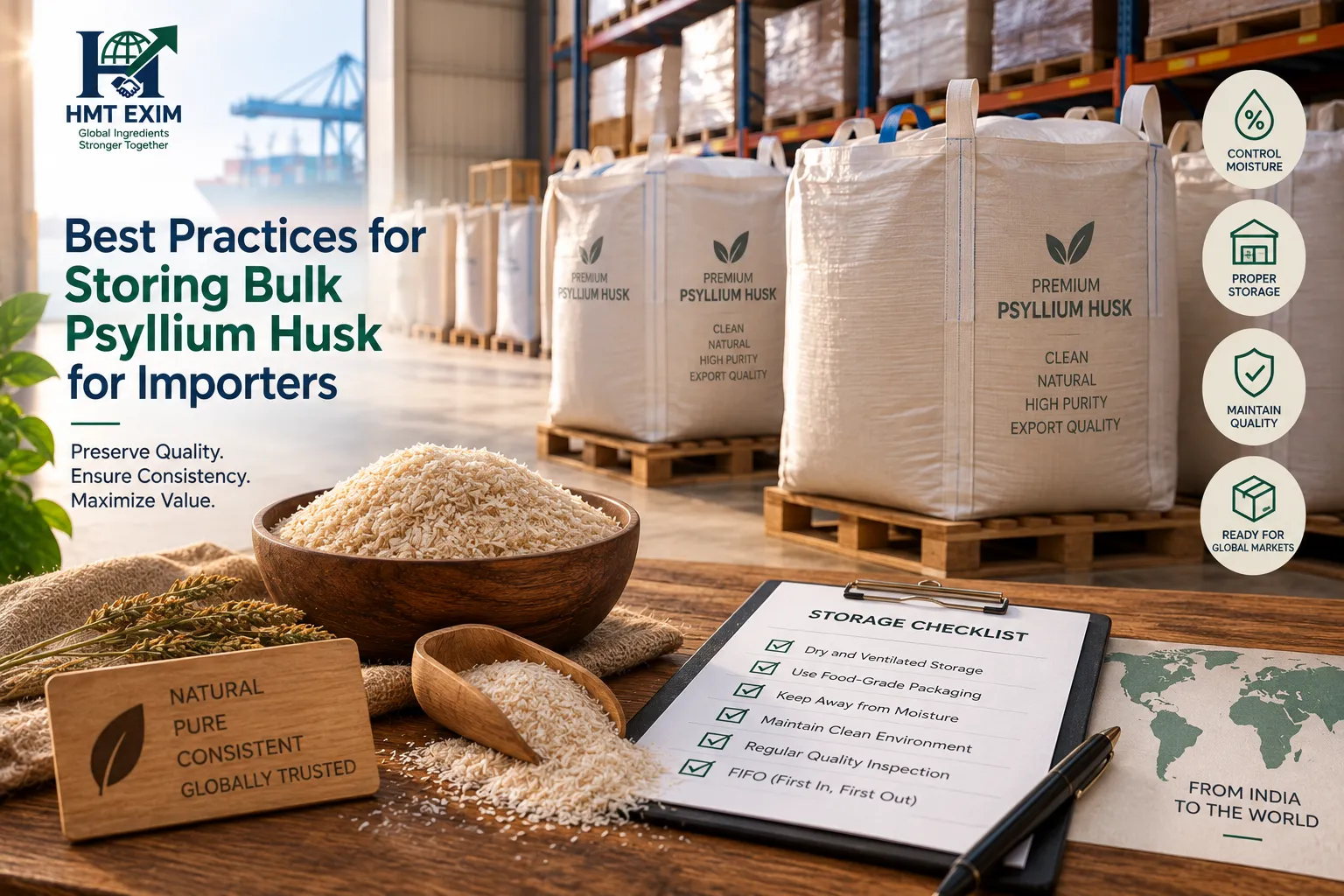
Buying high-quality psyllium husk is only the first step in maintaining product quality. Once a bulk shipment reaches the importing country, storage conditions can have a significant effect on how the product performs during its intended shelf life.
For international buyers purchasing psyllium husk in bulk, proper warehouse handling is especially important because the product may remain in storage before processing, repacking, blending or distribution.
Good storage practices are therefore not simply a warehouse concern. They are part of maintaining the quality agreed between the buyer and supplier.
Why Bulk Psyllium Husk Storage Matters
Psyllium husk is a dry plant-based ingredient that needs to be protected from unsuitable storage conditions. Moisture exposure, poor packaging integrity, excessive heat, contamination and improper warehouse handling can create avoidable quality problems.
For an importer, the objective should be to maintain the condition of the product from the moment the shipment is received until the material is used or dispatched to the next customer.
1. Keep Psyllium Husk in a Dry Storage Environment
Moisture management should be one of the first considerations when storing bulk psyllium husk.
The warehouse should be dry and protected from water leakage, condensation and direct exposure to humid conditions. Areas immediately beneath leaking roofs, near open loading zones or beside sources of water should be avoided.
Even when the incoming product meets the agreed moisture specification, unsuitable warehouse conditions can compromise packaging and product quality over time.
2. Protect the Original Packaging
Bulk psyllium husk should remain in its original export packaging until it is ready for processing, repacking or use, unless the buyer has a specific handling procedure.
Importers should inspect bags or other bulk packaging when the shipment arrives and look for:
- Tears or punctures
- Open or damaged closures
- Signs of water exposure
- Damaged outer surfaces
- Contamination around the package
- Unusual compression or handling damage
Damaged packages should be separated and assessed rather than being mixed immediately with unaffected stock.
3. Keep Bags Off the Floor
Bulk food ingredients should be stored in a way that minimizes direct contact with the warehouse floor.
Using suitable pallets or warehouse storage systems helps protect packaging from floor moisture, dirt and unnecessary handling damage.
There should also be enough space for warehouse personnel to inspect, move and clean around stored material.
4. Avoid Direct Contact With Walls
Leaving appropriate clearance between stored goods and walls can make inspection and cleaning easier and can reduce exposure to condensation or other building-related moisture.
This also helps warehouse teams identify leaks, pest activity or damaged packaging before a problem affects a larger quantity of stock.
5. Control Warehouse Cleanliness
Psyllium husk should be stored in a clean area suitable for food ingredients.
Warehouse housekeeping should include routine cleaning, removal of waste and control of conditions that could introduce dust, pests or foreign material into the storage area.
Storage areas should also be organized so that food ingredients are separated from chemicals, maintenance materials and other substances that could create a contamination risk.
6. Protect the Product From Pests
Pest control is an important part of food-ingredient storage.
Importers should have appropriate pest-prevention and monitoring procedures for their warehouse. Doors, windows, storage areas and receiving zones should be managed to reduce opportunities for pest entry.
Any evidence of pest activity should be investigated promptly, particularly if stored packaging has been damaged.
7. Avoid Unnecessary Temperature and Humidity Exposure
Storage conditions should remain appropriate for a dry food ingredient.
Extreme environmental conditions can increase the risk of packaging deterioration or moisture-related problems. Importers should therefore understand the storage conditions recommended for the specific product and packaging supplied.
Where warehouse conditions are highly humid, additional environmental monitoring may be useful.
8. Use a Proper Stock Rotation System
Importers should avoid allowing older inventory to remain untouched while newer shipments are consumed first.
A practical stock rotation system helps ensure that material is used according to its receiving or production date and supports better inventory control.
Depending on the buyer's operation, FIFO or another documented stock-management method may be used.
9. Record Every Incoming Shipment
Good traceability begins when the shipment reaches the warehouse.
Importers should maintain records that connect the received material to its relevant commercial and quality documentation.
Useful information can include:
- Supplier name
- Purchase order
- Invoice reference
- Batch or lot identification
- Quantity received
- Date received
- Packaging condition
- Certificate of Analysis where applicable
- Internal inspection results
This information can become valuable if a quality question arises later.
10. Check the Shipment Before Moving It Into Long-Term Storage
The receiving inspection should happen before the shipment disappears into the warehouse.
Importers should verify the received quantity, packaging condition, identifying information and relevant documentation against the purchase order and shipping documents.
Any visible discrepancy should be recorded and communicated through the appropriate commercial channel.
11. Keep Psyllium Husk Away From Strong Odours
Food ingredients should be protected from exposure to strong-smelling materials in the warehouse.
Importers should avoid storing psyllium husk alongside substances that could introduce undesirable odours or create a contamination concern.
A dedicated food-ingredient storage area can make segregation and warehouse control easier.
12. Handle Bulk Bags Carefully
Large bags and other bulk packaging should be moved using appropriate warehouse equipment and handling procedures.
Dragging bags across rough surfaces, dropping them from height or using unsuitable lifting equipment can damage the packaging.
Packaging damage is not only a physical handling issue. Once the protective barrier is compromised, the product may become more exposed to the surrounding environment.
13. Inspect Stored Stock Periodically
Storage inspection should continue after the shipment has been received.
Periodic checks can help identify:
- Damaged packaging
- Water exposure
- Unusual odours
- Pest activity
- Warehouse cleanliness issues
- Stock identification problems
- Improper storage conditions
Early identification gives the importer an opportunity to isolate affected material and investigate the cause.
14. Maintain Clear Batch Identification
Batch or lot identification should remain visible and traceable throughout storage and internal handling.
Do not remove or obscure important identification information during warehouse movement or repacking.
Clear batch management makes it easier to connect the physical material with supplier documentation and internal records.
15. Do Not Mix Different Lots Without a Controlled Procedure
Different shipments or lots may have different specifications, production dates or analytical results.
Importers should therefore avoid casually mixing lots simply to simplify warehouse handling.
If blending or consolidation is part of the manufacturing process, it should be performed under the buyer's documented quality and traceability procedures.
Storage and Psyllium Husk Quality Specifications
Storage cannot compensate for a product that did not meet the agreed specification when it was supplied.
Before accepting a bulk shipment, buyers should establish the required quality parameters with the supplier.
For psyllium husk, buyers may specify characteristics such as purity, moisture, swelling performance, mesh size, microbiological requirements and other parameters depending on the intended application.
Read Psyllium Husk Specifications: Purity, Moisture, Swelling Index and Mesh Explained for a deeper explanation of the main specification parameters.
Storage and Shelf Life
Shelf life should always be considered together with the storage conditions specified for the product.
A supplier's stated shelf life does not mean that the product can be stored under any warehouse condition until the stated date. The buyer needs to maintain appropriate storage conditions throughout the period.
For a detailed discussion, see Psyllium Husk Powder Shelf Life: What Bulk Buyers Should Know.
What Importers Should Check When Receiving Psyllium Husk
How Long-Term Buyers Can Improve Storage Control
For companies importing psyllium regularly, storage should become part of the overall supplier and inventory management process.
A documented system can include receiving inspection, batch identification, warehouse-location control, stock rotation, periodic inspection and release procedures.
This creates a more consistent process than relying only on visual checks when a shipment first arrives.
Questions Importers Should Ask Their Psyllium Supplier
- What storage conditions are recommended for the supplied product?
- What packaging format will be used for bulk shipment?
- How is batch identification maintained?
- What quality documentation accompanies the shipment?
- What is the expected shelf life under recommended storage conditions?
- Which quality parameters are tested before dispatch?
- How should damaged packaging be handled?
These questions can be discussed before the first commercial shipment rather than after the product reaches the warehouse.
Storage Is Part of the Importer's Quality System
A strong supplier relationship is important, but product quality does not stop at the exporter's facility.
Once the material reaches the importing country, warehouse conditions, handling procedures and inventory management become part of the product's quality journey.
For long-term buyers, supplier quality and importer-side storage should therefore be viewed as connected parts of the same supply chain.
How HMT Exim Supports Bulk Psyllium Buyers
HMT Exim works with international B2B buyers sourcing Indian agricultural and food ingredients and can discuss product specifications, packaging and shipment requirements before order confirmation.
For buyers sourcing psyllium husk, discussing the required specification and intended application early can help establish the appropriate commercial and quality expectations.
To discuss a bulk sourcing requirement, contact HMT Exim.
Frequently Asked Questions
How should bulk psyllium husk be stored?
It should be kept in a clean, dry and suitable food-ingredient storage environment, protected from moisture, contamination, pests and packaging damage.
Should psyllium husk bags be stored directly on the floor?
Using suitable pallets or storage systems helps protect packaging from floor moisture, dirt and unnecessary handling damage.
Why is moisture control important for psyllium husk?
Moisture exposure can affect the condition of packaging and product quality, so buyers should maintain suitable storage conditions after receiving the shipment.
How should importers manage different psyllium lots?
Different lots should remain clearly identifiable and traceable. Mixing lots should only occur under a controlled procedure appropriate to the buyer's quality system.
Does proper storage extend psyllium husk shelf life?
Proper storage helps maintain product condition throughout the stated shelf-life period, but it does not change the shelf life originally established for the product.
Final Takeaway
For bulk psyllium husk importers, quality management continues after the container reaches the destination country.
Dry storage, intact packaging, clean warehouse conditions, pest control, careful handling, batch traceability and proper stock rotation all contribute to maintaining the condition of the imported ingredient.
The best approach is to establish storage and receiving procedures before the first bulk shipment arrives and keep those procedures consistent across subsequent imports.
If you are sourcing bulk psyllium husk from India, contact HMT Exim to discuss your product, packaging and export requirements.