One of the first questions international buyers ask when sourcing turmeric from India is: Which curcumin percentage should I buy?
The answer depends on your product, target market and commercial goals—not simply on choosing the highest percentage available.
Curcumin is the natural compound responsible for turmeric's yellow colour and many of its functional properties. Buyers often compare 2%, 3%, 4% and 5% curcumin grades, but each serves different industries, price points and quality expectations.
This guide explains how curcumin levels affect export quality, commercial applications, pricing considerations and buyer decisions.
What Is Curcumin?
Curcumin is the primary natural pigment found in turmeric (Curcuma longa) that gives the spice its characteristic golden-yellow colour.
International buyers frequently evaluate curcumin percentage because it can influence product positioning, quality expectations and commercial value.
However, curcumin is only one quality parameter. Moisture, mesh size, cleanliness, microbiological safety, packaging and documentation remain equally important in professional export transactions.
For a deeper explanation, read What Is Curcumin in Turmeric? Complete Buyer's Guide.
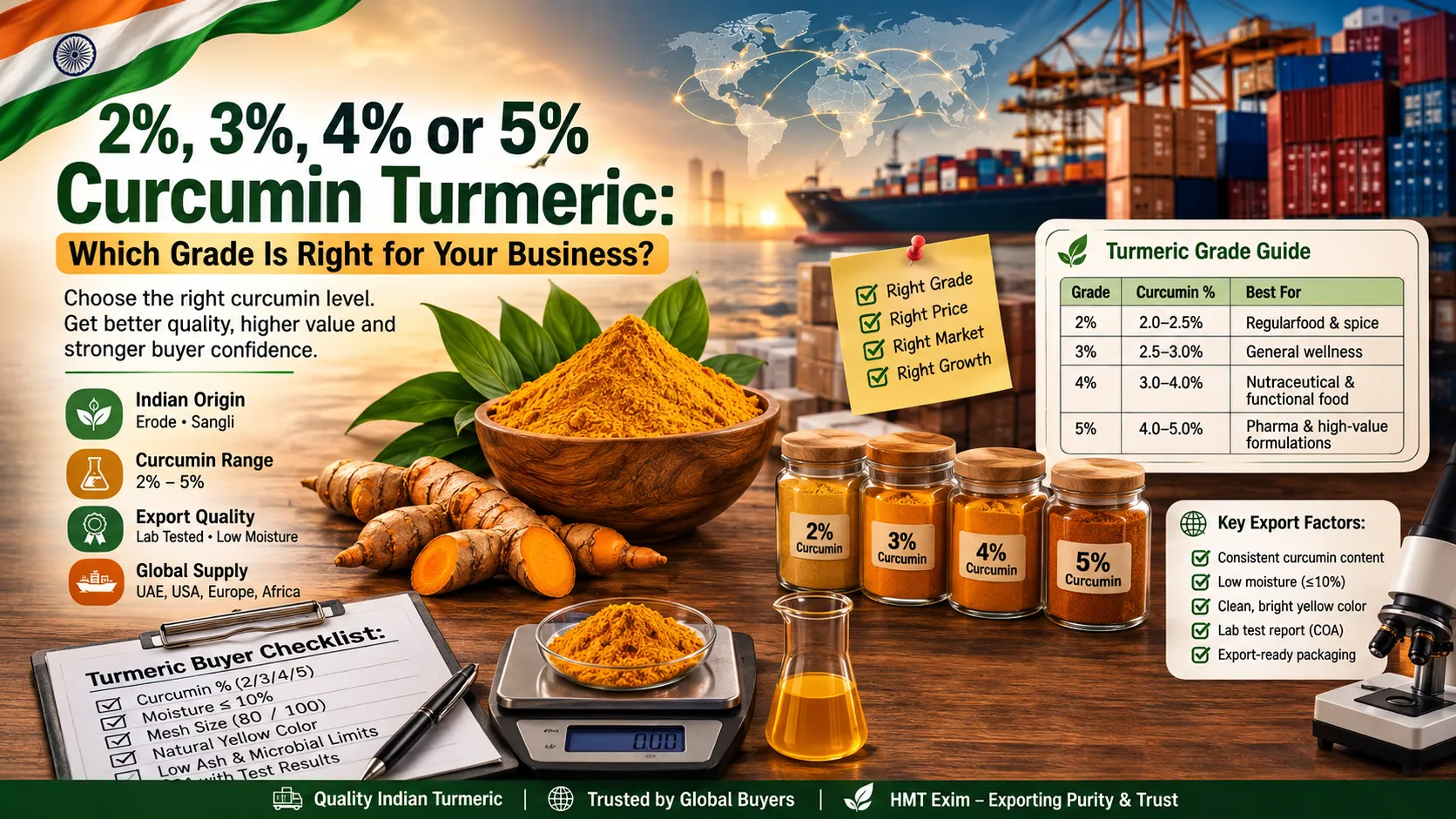
Quick Comparison of Curcumin Grades
Actual availability depends on the variety, crop conditions and supplier capability.
2% Curcumin Turmeric
Turmeric around the 2% range is commonly discussed for buyers prioritizing commercial affordability.
It may suit:
- Wholesale spice distribution
- Bulk food ingredients
- Cost-sensitive markets
- Large-volume purchasing
Buyers comparing multiple suppliers often balance price with consistent quality rather than focusing only on curcumin percentage.
3% Curcumin Turmeric
The 3% range often represents a practical balance between commercial pricing and stronger quality positioning.
Potential applications include:
- Food manufacturers
- Spice brands
- Retail packaging
- Private-label products
For many buyers, consistency across shipments becomes more valuable than chasing the highest advertised percentage.
4% Curcumin Turmeric
Higher-curcumin turmeric is frequently discussed for premium product positioning.
Buyers may look for:
- Stronger product positioning
- Premium branding
- Quality-focused ingredient sourcing
- Higher-value formulations
Laboratory verification becomes increasingly important when supplying premium specifications.
5% Curcumin Turmeric
Approximately 5% curcumin is often associated with premium commercial requirements.
Buyers requesting higher-curcumin material generally expect:
- Consistent specifications
- Laboratory documentation
- Reliable batch quality
- Professional export packaging
Exporters should avoid promising a fixed percentage without supporting documentation where required.
Curcumin Is Not the Only Quality Parameter
Professional buyers rarely approve suppliers based on curcumin alone.
A complete evaluation typically includes:
- Curcumin percentage
- Moisture
- Mesh size
- Colour
- Purity
- Foreign matter
- Microbiological quality
- Heavy metals
- Certificate of Analysis
- Packaging quality
Our guide on Turmeric Powder Specifications explains these factors in greater detail.
How Indian Turmeric Varieties Influence Curcumin
Curcumin performance can vary depending on:
- Growing region
- Turmeric variety
- Harvest conditions
- Processing
- Storage
Popular sourcing regions include Erode and Sangli, both known for supplying commercial export markets.
Our upcoming comparison of Erode vs Sangli Turmeric explores these differences in detail.
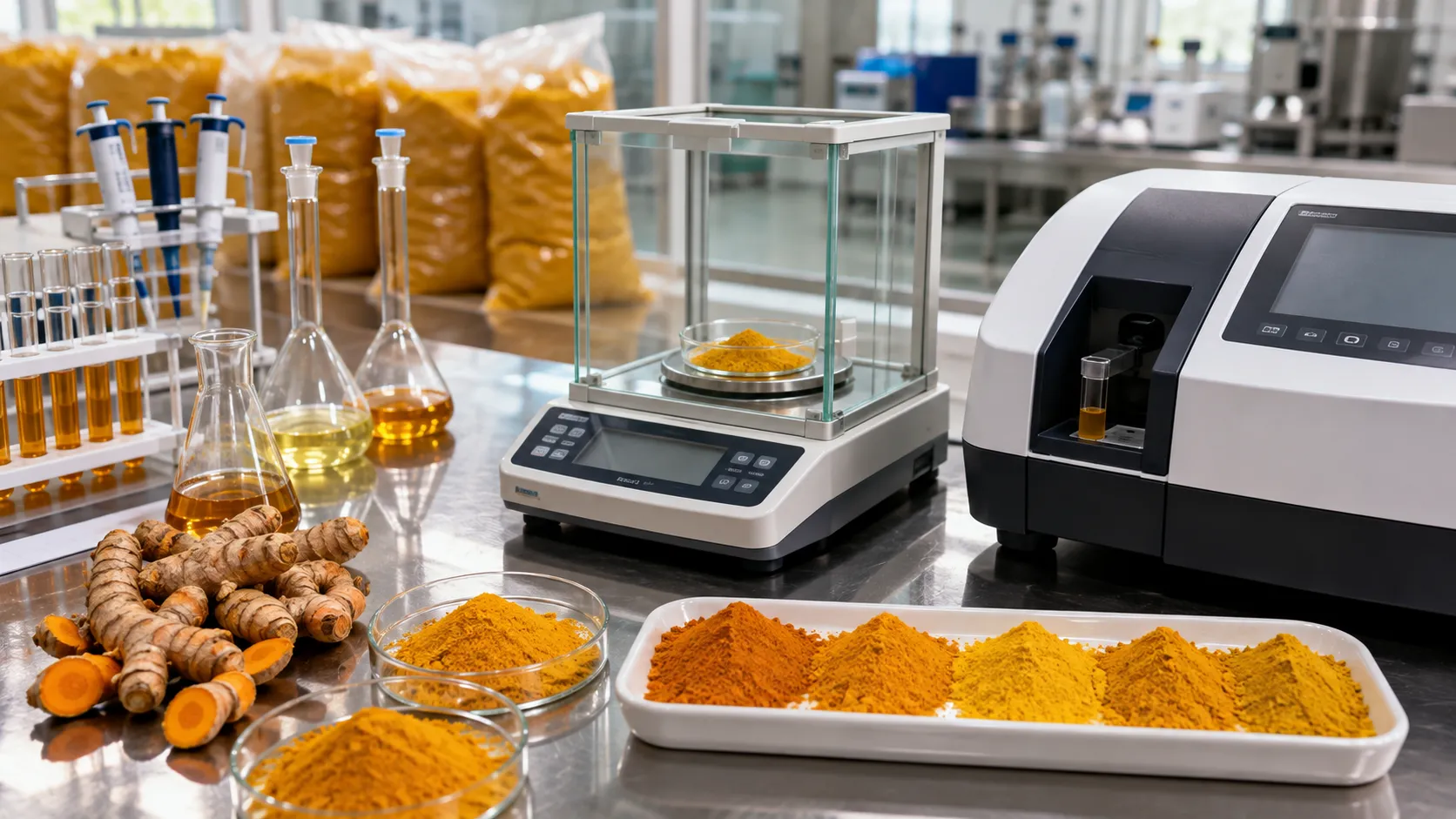
Laboratory Testing Matters
When selling premium turmeric internationally, buyers may request laboratory documentation supporting the agreed specification.
A quality-focused shipment may include:
- Certificate of Analysis
- Moisture results
- Curcumin testing
- Microbiological testing where applicable
- Heavy-metal testing where required
Supporting documentation increases buyer confidence and reduces disputes.
How HMT Exim Approaches Turmeric Quality
HMT Exim sources Indian turmeric from established production regions and emphasizes quality-focused inspections, laboratory testing where applicable, export-ready packaging and documentation support for international buyers. The company's product profile highlights turmeric sourced from Erode and Sangli with export-oriented packaging and customer-focused supply practices.
Explore our Turmeric Powder page to learn more about our export offerings.
How Buyers Should Choose the Right Grade
Instead of automatically choosing the highest percentage, buyers should match the specification to their application.
Choosing the correct grade means balancing performance, documentation, packaging and commercial value.
Frequently Asked Questions
Is 5% curcumin always better than 3%?
Not necessarily. The best choice depends on the buyer's product, quality expectations and commercial requirements.
Does higher curcumin always mean better turmeric?
No. Buyers also evaluate moisture, purity, mesh size, microbiological quality, packaging and documentation.
Which curcumin level is commonly used by food manufacturers?
Many buyers balance quality, consistency and commercial value rather than selecting the highest percentage alone.
Can exporters provide laboratory reports?
Yes. Many professional export shipments include laboratory documentation where required by the buyer.
How should buyers choose a turmeric supplier?
Evaluate product consistency, testing capability, packaging quality, documentation support and supplier reliability—not just curcumin percentage.
Final Takeaway
Choosing between 2%, 3%, 4% and 5% curcumin is a commercial decision rather than simply selecting the highest number.
Successful international sourcing depends on matching the correct grade with your application while ensuring reliable quality, laboratory documentation, export-ready packaging and supplier consistency.
If you're looking for export-quality turmeric from India, contact HMT Exim to discuss your required specification, packaging and destination market.