If you're planning to export products from India, obtaining an Import Export Code (IEC) is one of the first legal steps before shipping your first order.
Many first-time exporters confuse IEC with GST registration or assume it is required only for large businesses. In reality, the IEC acts as your business's identification number for international trade and forms the foundation of most commercial export transactions.
This guide explains what an IEC is, who needs it, how the application process works and the common mistakes exporters should avoid.
What Is an Import Export Code (IEC)?
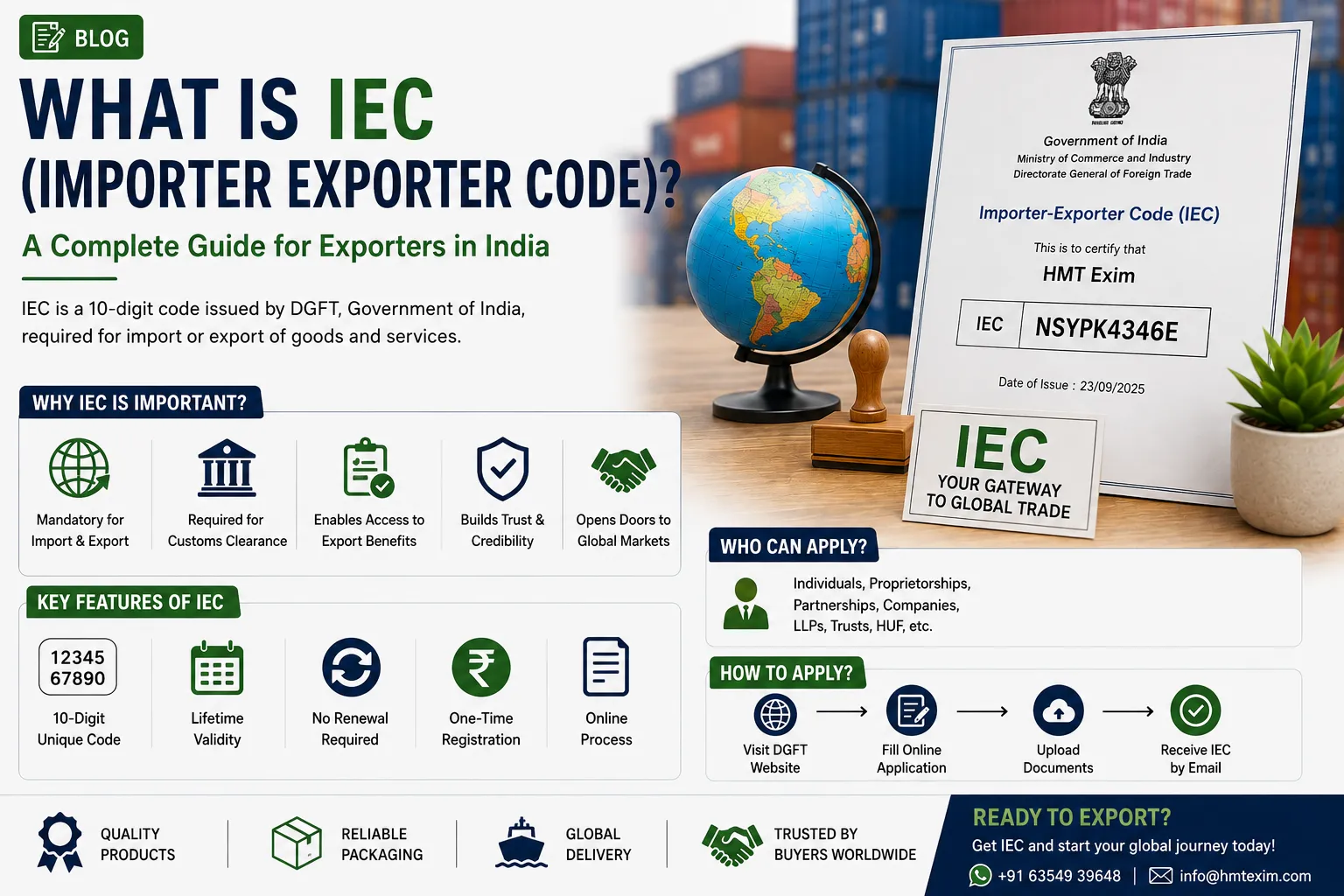
An Import Export Code is a unique business identification number issued by the Directorate General of Foreign Trade (DGFT) for businesses involved in international trade.
It allows eligible businesses to participate in export and import activities under India's trade framework.
For merchant exporters, manufacturers and growing export businesses, obtaining an IEC is typically one of the earliest compliance steps before approaching overseas buyers.
Why Is an IEC Important?
The IEC is more than a registration certificate—it becomes part of your export identity.
It helps businesses:
- Export goods internationally
- Import products where applicable
- Complete customs procedures
- Operate through export-related banking channels
- Build credibility with overseas buyers
- Participate in India's export ecosystem
Without the appropriate registration, completing many commercial export transactions becomes difficult.
Who Needs an IEC?
Most businesses engaged in commercial exports require an IEC before beginning international trade.
This generally includes:
- Sole proprietorships
- Partnership firms
- Private limited companies
- LLPs
- Merchant exporters
- Manufacturer exporters
- Other eligible business entities participating in international trade
The exact applicability depends on the nature of the business and current regulations.
Who Issues the IEC?
The Directorate General of Foreign Trade (DGFT), operating under the Ministry of Commerce and Industry, issues IEC registrations through its official online portal.
Businesses should always use official government channels for registration and verification.
Documents Generally Required
Before starting the application, exporters should prepare accurate business information.
Commonly required information includes:
- PAN details
- Business information
- Registered address
- Bank account details
- Digital verification where applicable
Applicants should always verify the latest requirements through the official DGFT portal.
Step-by-Step IEC Application Process
- Prepare business information.
- Access the official DGFT portal.
- Complete the online application.
- Provide required business details.
- Complete applicable verification.
- Receive the IEC after successful processing.
Carefully reviewing all information before submission helps avoid unnecessary corrections.
What Information Appears on an IEC Certificate?
A typical IEC certificate identifies important business details such as:
- IEC number
- Business name
- Business constitution
- Registered address
- Issue information
- Authorized signatory details
Businesses should keep this information accurate whenever updates become necessary.
HMT Exim's IEC Example
HMT Exim operates with an officially issued IEC under the DGFT system, demonstrating how Indian export businesses complete this important compliance step before participating in international trade. The certificate identifies HMT Exim as a proprietorship and records its official business registration details through the DGFT process.
IEC vs GST: What's the Difference?
This is one of the most common questions asked by new exporters.
These registrations perform different functions and should not be treated as substitutes.
Common Mistakes First-Time Exporters Make
- Using inconsistent business details across documents
- Applying with incorrect information
- Ignoring business updates
- Confusing GST with IEC
- Using unofficial registration channels
Taking time to verify business information before applying helps avoid unnecessary delays.
Can One IEC Be Used for Multiple Products?
Yes. The IEC identifies the business rather than a specific product.
However, individual products may still require additional compliance depending on their category and destination country.
For example, exporting Turmeric Powder or Psyllium Husk may involve buyer-specific quality documentation alongside the IEC.
How IEC Fits Into the Export Journey
An IEC is one milestone in building a successful export business.
A practical workflow looks like:
- Choose the right export product.
- Obtain IEC.
- Complete business registrations where applicable.
- Find international buyers.
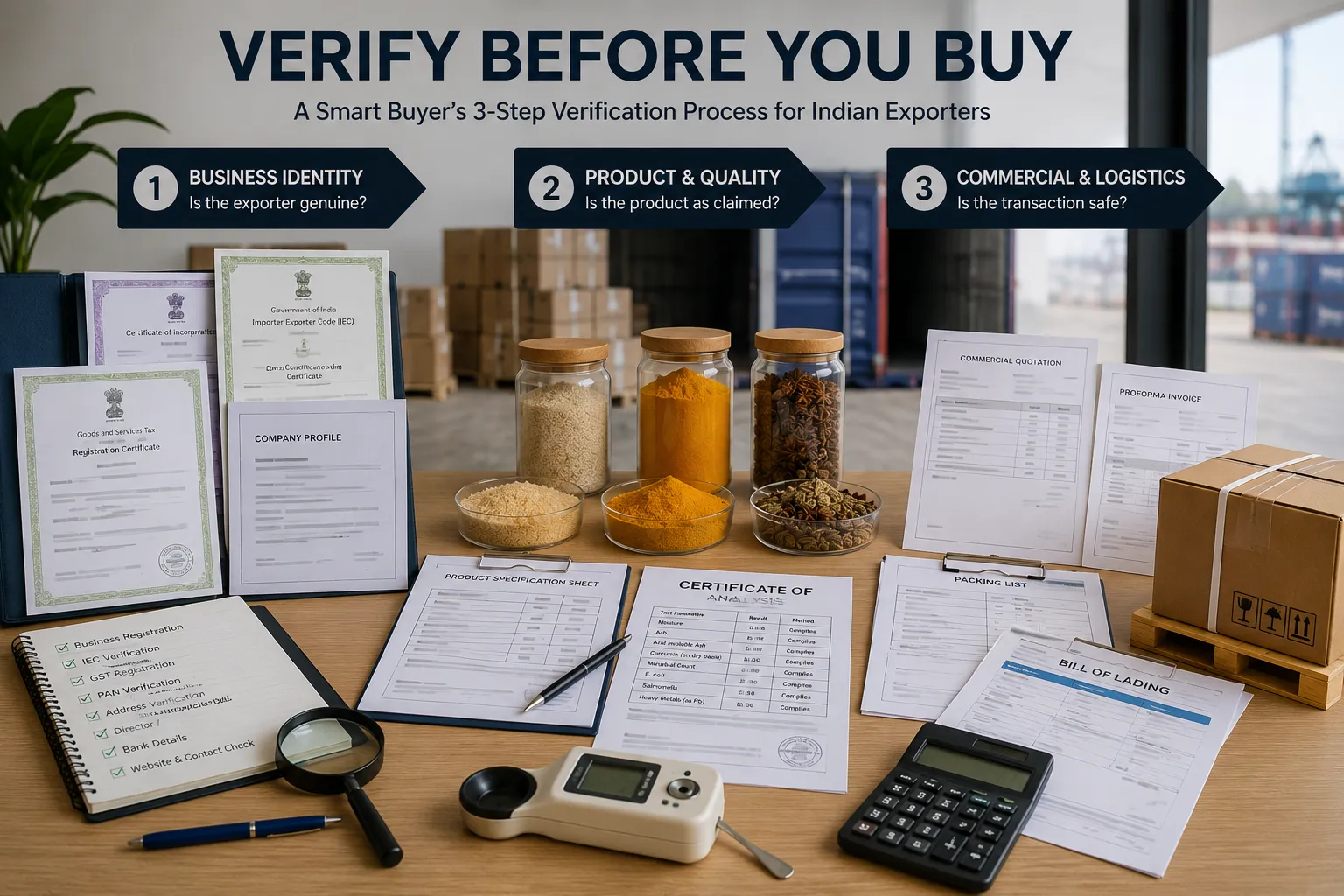
- Prepare product specifications.
- Arrange packaging and logistics.
- Complete export documentation.
- Ship internationally.
Our guide on How to Choose the Right Product for Export From India explains how product selection fits into this process.
Frequently Asked Questions
Is IEC mandatory for exporters?
Most commercial exporters require an IEC before participating in international trade, subject to applicable regulations.
Who issues the IEC?
The Directorate General of Foreign Trade (DGFT) issues IEC registrations through its official online system.
Can a sole proprietor get an IEC?
Yes. Sole proprietorship businesses can obtain an IEC subject to applicable requirements.
Is GST the same as IEC?
No. GST and IEC serve different purposes.
Can an IEC expire?
Businesses should follow current DGFT rules regarding maintenance and updating of IEC information.
Final Takeaway
The Import Export Code is one of the first building blocks of a successful export business.
Obtaining it early, keeping business information accurate and understanding how it fits into the export process helps businesses build stronger relationships with international buyers.
If you're preparing to export Indian products internationally, contact HMT Exim to discuss sourcing, documentation and export requirements.